
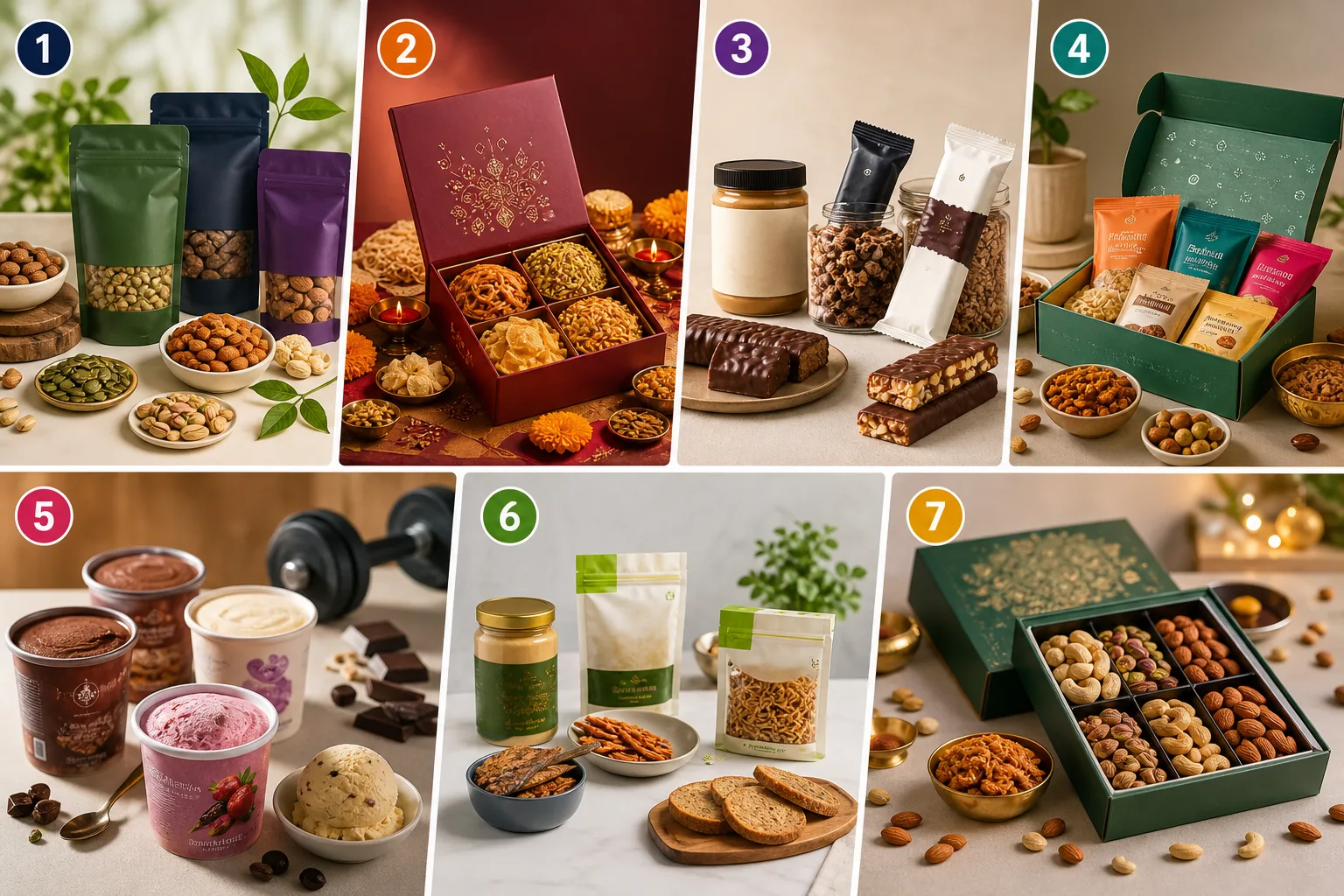
India's snack market is undergoing a quiet but powerful revolution. While legacy brands like Haldiram's and Bikaji still dominate supermarket shelves, a new wave of homegrown, founder-led snack brands is carving out serious market share — driven by health-conscious consumers, social media discovery, and a growing appetite for authentic regional flavours. In 2026, these brands are not just surviving; they're scaling fast.
Here's a look at seven homegrown snack brands that are genuinely winning customers over — and what businesses can learn from their rise.
1. Farmley – Nuts, Seeds, and the Healthy Snacking Movement
Farmley has built a strong reputation in the dry fruits and seeds segment, offering everything from roasted makhana to flavoured almonds at accessible price points. What sets them apart is their direct-to-farmer sourcing story, which resonates with urban buyers who want clean-label products. Their packaging is modern, their social content is educational, and their repeat purchase rates are impressively high.
2. Munchilicious – Regional Flavours, National Ambition
Founded in Pune, Munchilicious built its initial following on hyper-authentic Maharashtra-style chakli, chivda, and shev. Their strategy was smart: sell what people's mothers and grandmothers actually made, but package it beautifully for the gifting market. Today they ship across India and have a thriving D2C website alongside marketplace presence.
3. The Whole Truth – Honest Snacking at a Premium
The Whole Truth is a master class in transparency-based branding. Every product label lists exactly what's inside with no ingredient jargon — just real food. Their protein bars, nut butters, and granola have found a loyal audience among fitness-focused millennials willing to pay a premium for genuinely clean ingredients. Their "nothing to hide" positioning is now a benchmark for Indian food brands.
4. Snackible – Office Snacking Reimagined
Snackible started with a B2B model, supplying healthy snack boxes to corporate offices. Post-pandemic, they pivoted smartly toward D2C subscriptions and gifting, building a large catalogue of baked, low-calorie, and protein-rich options. Their subscription model drives predictable recurring revenue — a lesson every food founder should study.
5. Get-A-Whey – Frozen Desserts with a Functional Twist
Get-A-Whey entered the market with high-protein ice creams, targeting gym-goers who didn't want to give up dessert. Celebrity backing and sharp Instagram content turned them into a cult brand almost overnight. They're proof that positioning a snack as both indulgent and functional can unlock a high-spending, loyal consumer segment.
6. Ketofy – Riding the Low-Carb Wave
Ketofy has built an entire ecosystem of keto-friendly snacks, from cookies and bread to namkeen and breakfast cereals. They understood early that the keto diet community in India was underserved, and they filled that gap completely. Their community-first approach — with active WhatsApp groups, recipe sharing, and customer success stories — drives both retention and word-of-mouth growth.
7. Happilo – Premium Dry Fruits for the Gift-Giving Season
Happilo has cracked the gifting market in a big way. Their elegant packaging and premium dry fruit mixes are a go-to for corporate gifts and festive hampers. They've built strong offline distribution alongside a D2C channel, and their seasonal campaigns around Diwali and Raksha Bandhan generate enormous spikes in revenue.
Market Comparison: Estimated Social Following & Audience Reach (2026)
Relative social media presence and brand reach — illustrative comparison based on publicly available data (2026)
What These Brands Have in Common
Look closely at these seven brands and a pattern emerges. Every single one of them:
- Has a clear, differentiated positioning — they don't try to out-Haldiram's Haldiram's
- Uses content marketing and community building as primary growth channels
- Invests in packaging as a marketing asset, not just a container
- Builds D2C channels alongside marketplaces for margin and data control
- Targets specific consumer tribes (health nuts, keto followers, gifting buyers) rather than everyone
What This Means for Your Food Business
If you're building or planning a food brand in India, the lesson from these success stories is clear: niche wins. Don't try to appeal to the entire market. Find a specific consumer with a specific need and serve them better than anyone else. Build community, tell your story authentically, and invest in your product quality relentlessly.
For more insights on India's growing food and brand landscape, visit our Food & Brands section on BusinessTalks.in.
Conclusion
India's snack market is large, growing, and increasingly open to challenger brands. The seven brands profiled here didn't win by outspending incumbents — they won by out-thinking them. With the right positioning, smart digital marketing, and genuine product quality, there is still massive room for new brands to build loyal followings and profitable businesses in this space.