
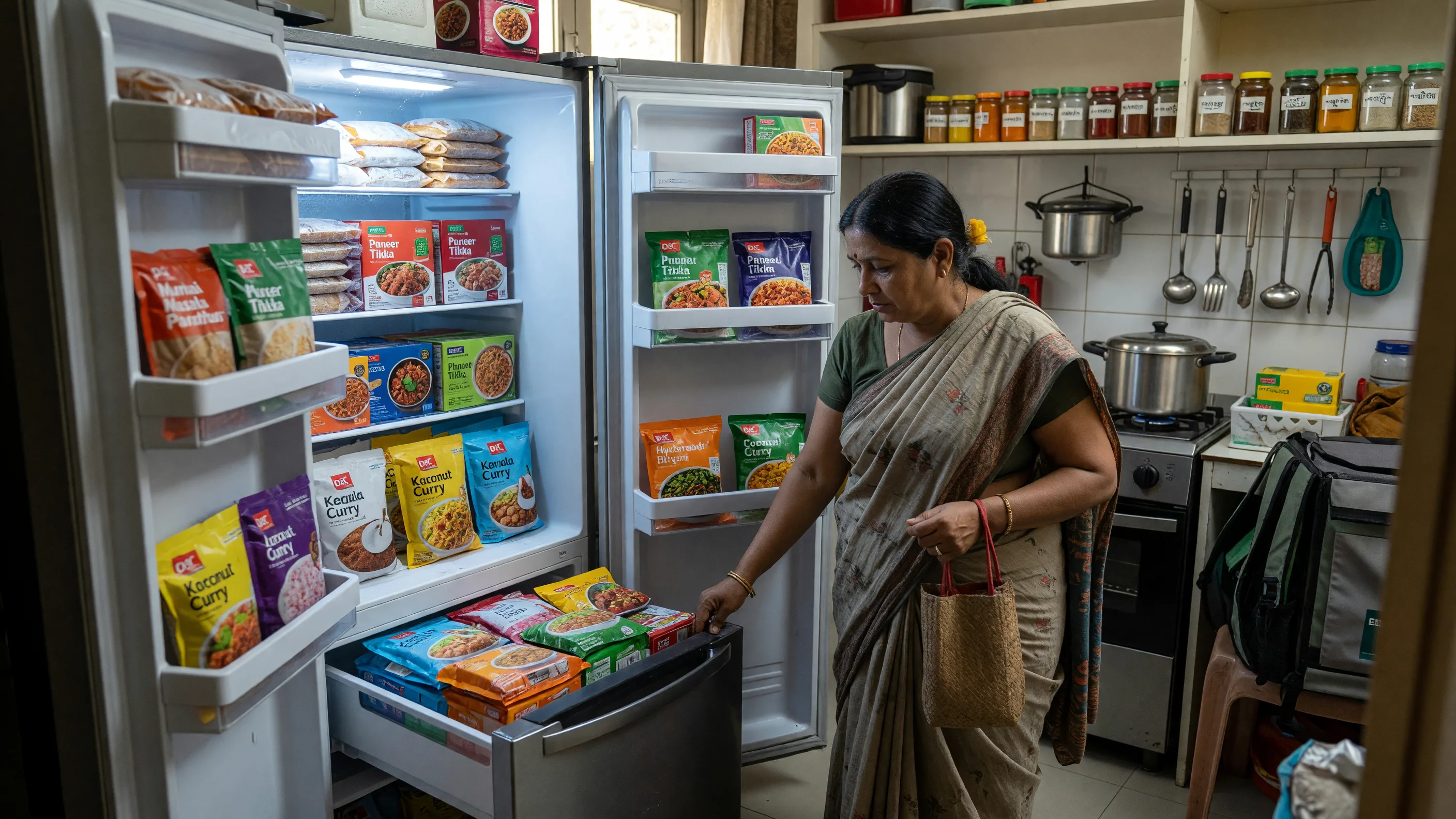
For decades, "frozen food" in India meant a sad bag of peas or a box of fish fingers shoved to the back of the freezer. That image is changing fast. A new wave of direct-to-consumer (D2C) brands is filling Indian freezers with ready-to-cook biryanis, artisanal momos, plant-based kebabs, gourmet parathas, and restaurant-quality curries, and customers are happily paying a premium for the convenience.
What was once a low-trust, low-margin category has quietly become one of the most exciting spaces in Food & Brands. In this piece we'll unpack why frozen food is booming in India, who is actually buying it, and what hungry founders can learn from the brands getting it right.
Why Frozen Suddenly Became Cool
Three forces collided to create this moment. First, urban Indians are busier and live in smaller households than ever, and cooking elaborate meals every night simply isn't realistic. Second, the pandemic years rewired how people think about home cooking and stocking up. Third, and most importantly, a generation of food founders decided to treat frozen not as cheap filler but as a premium, chef-driven product.
The result is a category that finally tastes good. When a frozen galouti kebab genuinely rivals what you'd get at a sit-down restaurant, the old stigma quietly melts away.
The Numbers Behind the Boom
The growth has been hard to ignore. The illustrative chart below shows how demand for India's packaged frozen food has climbed over recent years, with the steepest jumps coming from premium D2C players rather than old-school mass brands.
Market Comparison
Illustrative growth in premium frozen-food demand, indexed to 2026 = 100.
The shape of that curve tells the real story: this isn't a fad spike, it's a steady, compounding shift in how urban India eats at home.
What's Actually Driving Buyers
Convenience is the obvious answer, but it runs deeper than that. Today's frozen-food buyer is making a series of small, sensible trade-offs:
- Time over effort: A working couple would rather spend twelve minutes than ninety on a weeknight dinner.
- Variety without skill: Frozen lets people enjoy dishes they could never cook well themselves, from Korean dumplings to Hyderabadi haleem.
- Less waste: Cook two portions tonight, freeze the rest. No spoiled vegetables, no guilt.
- Trust in the brand: Clean labels, no nasty preservatives, and transparent sourcing turn a sceptic into a regular.
How New Brands Are Winning
The brands pulling ahead share a few habits. They lead with taste and obsess over the "reheat experience," because a product that's delicious in their kitchen but rubbery in yours is dead on arrival. They invest heavily in packaging that survives the journey and still looks premium in the freezer. And they build community, encouraging customers to share photos of their plated meals, turning buyers into marketers.
Crucially, the winners treat their D2C website and subscription model as the heart of the business, not an afterthought. Repeat orders, not one-time trials, are where frozen food makes real money. A customer who reorders momos every fortnight is worth far more than a dozen curious first-timers.
The Cold Chain Challenge
None of this is easy. Frozen food lives or dies by the cold chain, the unbroken sequence of freezing, storage, and refrigerated delivery that keeps a product safe from factory to freezer. One warm van and the entire order is ruined, along with the customer's trust.
This is the single biggest barrier to entry, and also the biggest moat for brands that solve it. Smart founders start hyper-local, mastering delivery in one or two cities before dreaming of national scale. Trying to ship frozen biryani across the country on day one is a fast route to refunds and angry reviews.
Lessons for Aspiring Food Founders
If the frozen aisle is calling your name, a few hard-won lessons apply:
- Nail one dish first. A single hero product done brilliantly beats a sprawling menu done averagely.
- Test the reheat, not just the recipe. Your customer's microwave is your real kitchen.
- Respect food safety and licensing. Frozen food is heavily regulated for good reason, so cut no corners here.
- Go local before going big. Prove the cold chain in your own city first.
For founders weighing how to take any food product to market, our Local Businesses coverage explores how small operators scale step by step.
Final Thoughts
India's freezer is no longer a graveyard for forgotten peas. It's becoming a curated shelf of premium, ready-to-enjoy meals built by founders who understand modern life. The opportunity is enormous, but so is the operational difficulty. The brands that win won't be the loudest marketers, they'll be the ones who make a frozen meal taste like it was cooked fresh and deliver it without ever breaking the chill. For ambitious food entrepreneurs, that's both the challenge and the prize.