
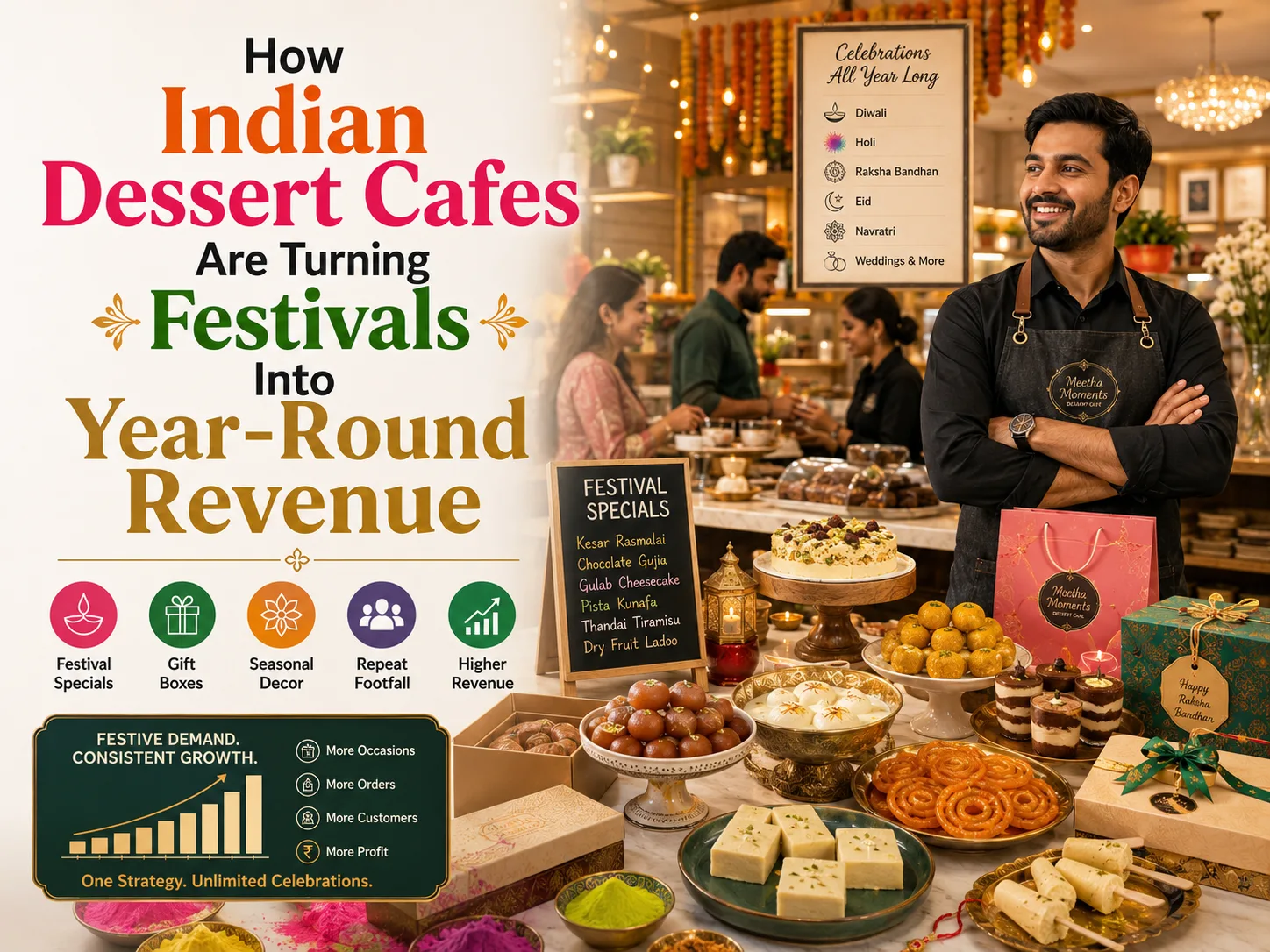
Indian dessert cafes once depended heavily on festival spikes, birthday orders, and weekend footfall. Today, the smarter ones are using those same occasions as entry points for year-round revenue. A customer who buys modaks during Ganesh Chaturthi may later buy fusion cakes, gift hampers, corporate dessert boxes, or monthly family packs. The opportunity is not only in selling sweets for one week; it is in building a food brand that customers remember every month. This is why dessert businesses are an important part of the Food & Brands conversation on BusinessTalks.in.
India has always celebrated with food, but consumer expectations have changed. Buyers want taste, hygiene, presentation, convenience, and story. They may still love traditional flavours, yet they also enjoy modern packaging, online ordering, small portions, and limited-edition menus. Dessert cafes sit perfectly between heritage and lifestyle. They can offer gulab jamun cheesecake, motichoor jars, filter coffee tiramisu, millet laddoo boxes, and premium mithai platters without losing cultural relevance.
From Occasion Selling to Relationship Selling
The traditional festival model is simple: produce more during peak weeks, run offers, and wait for the next season. The modern model is more strategic. Dessert cafes use festivals to collect customer data, introduce new products, test packaging, and build repeat communication. After the festival, customers receive WhatsApp updates, birthday reminders, loyalty offers, and recommendations based on previous purchases.
This approach turns one-time buyers into a community. A family that ordered Diwali hampers can be invited to try weekend dessert jars. A corporate buyer who purchased Rakhi boxes can be approached for employee birthday subscriptions. A housing society order can lead to monthly pop-up stalls. The key is to treat every festive order as the beginning of a relationship, not the end of a campaign.
Menu Planning That Works Beyond Festivals
Good dessert cafes design menus in layers. The first layer contains regular bestsellers such as brownies, cakes, pastries, waffles, kulfi, or traditional sweets. The second layer contains seasonal specials. The third layer contains gifting formats that can be used for festivals, weddings, office events, and personal celebrations. This structure keeps operations stable while still giving customers something new.
For example, a cafe may launch a Diwali dry-fruit brownie box. After Diwali, the same base product can become a premium tea-time box, a corporate meeting dessert, or a birthday return gift. A Holi thandai cheesecake can later become a summer dessert cup. A mango shrikhand tart can continue as a seasonal weekend special. Smart repurposing reduces wastage and makes product development more profitable.
Market Comparison
| Revenue Channel | Best Use | Repeat Potential |
|---|---|---|
| Festival Hampers | Bulk gifting and premium packaging | Medium to High |
| Dessert Subscriptions | Families, offices, and societies | High |
| Cafe Walk-Ins | Impulse purchases and experience | Medium |
Packaging as a Profit Lever
Packaging is no longer only protection; it is part of the product. A dessert that looks premium can command a higher price, especially in gifting. Cafes should invest in sturdy boxes, clear labels, ingredient notes, storage instructions, and branded thank-you cards. A small QR code can lead to a reorder page, Google review link, or festival pre-booking form. These details help a local cafe feel like a professional food brand.
At the same time, packaging should not destroy margins. Owners must calculate per-box cost carefully. A beautiful hamper that uses expensive boxes, ribbons, inserts, and delivery support may look attractive but earn little. The right balance is premium enough to impress customers and practical enough to scale during rush periods.
Using Digital Channels to Build Demand
Instagram is powerful for dessert cafes because the product is visual. Short videos showing layering, garnishing, boxing, and customer reactions can generate strong local interest. However, depending only on viral reels is risky. Cafes should also maintain Google Business Profile, collect reviews, build WhatsApp broadcast lists, and publish simple landing pages for festive pre-orders. A post may create attention, but a clear order page converts attention into sales.
For deeper growth, dessert brands can combine content with paid promotions. A campaign targeting nearby societies, offices, colleges, and event planners can work well before festivals. Retargeting can show ads to people who visited the menu page but did not order. Business owners can explore related ideas under Marketing Insights to understand how local food brands can improve conversion without overspending.
Corporate Orders and Community Partnerships
Corporate gifting is a major opportunity for dessert cafes that can deliver consistent quality. Companies need gifts for Diwali, New Year, employee onboarding, client meetings, and team celebrations. A cafe should prepare a corporate catalogue with price tiers, customization options, delivery timelines, invoice details, and sample photos. Even a small office order can become recurring if service is smooth.
Community partnerships are equally useful. Tie-ups with event planners, wedding photographers, gyms, boutique stores, schools, and residential societies can create steady demand. A dessert cafe can run tasting stalls, sponsor small events, or provide exclusive society discounts. These partnerships are often cheaper than broad advertising and produce warmer leads.
Operations During Peak Demand
Festivals can damage a brand if the cafe accepts more orders than it can handle. Late delivery, poor packaging, or inconsistent taste can turn a happy customer into a negative reviewer. Owners should set order cut-off dates, limit menu complexity, pre-plan raw material purchase, and create batch-wise production schedules. It is better to sell 500 boxes perfectly than 900 boxes chaotically.
Staff training is also important. Everyone should know order codes, packaging steps, allergy notes, and delivery labels. A simple checklist can prevent mistakes during rush hours. Customer communication should be proactive: confirm order, share dispatch status, and give storage instructions. These small actions build trust.
Conclusion
Indian dessert cafes have a rare advantage: they sell products connected to emotion, memory, celebration, and gifting. By using festivals as a discovery engine and building repeat systems around subscriptions, corporate orders, digital marketing, and community partnerships, they can create revenue beyond seasonal peaks. The cafes that win will not just make beautiful desserts; they will build memorable brands that customers return to throughout the year.