
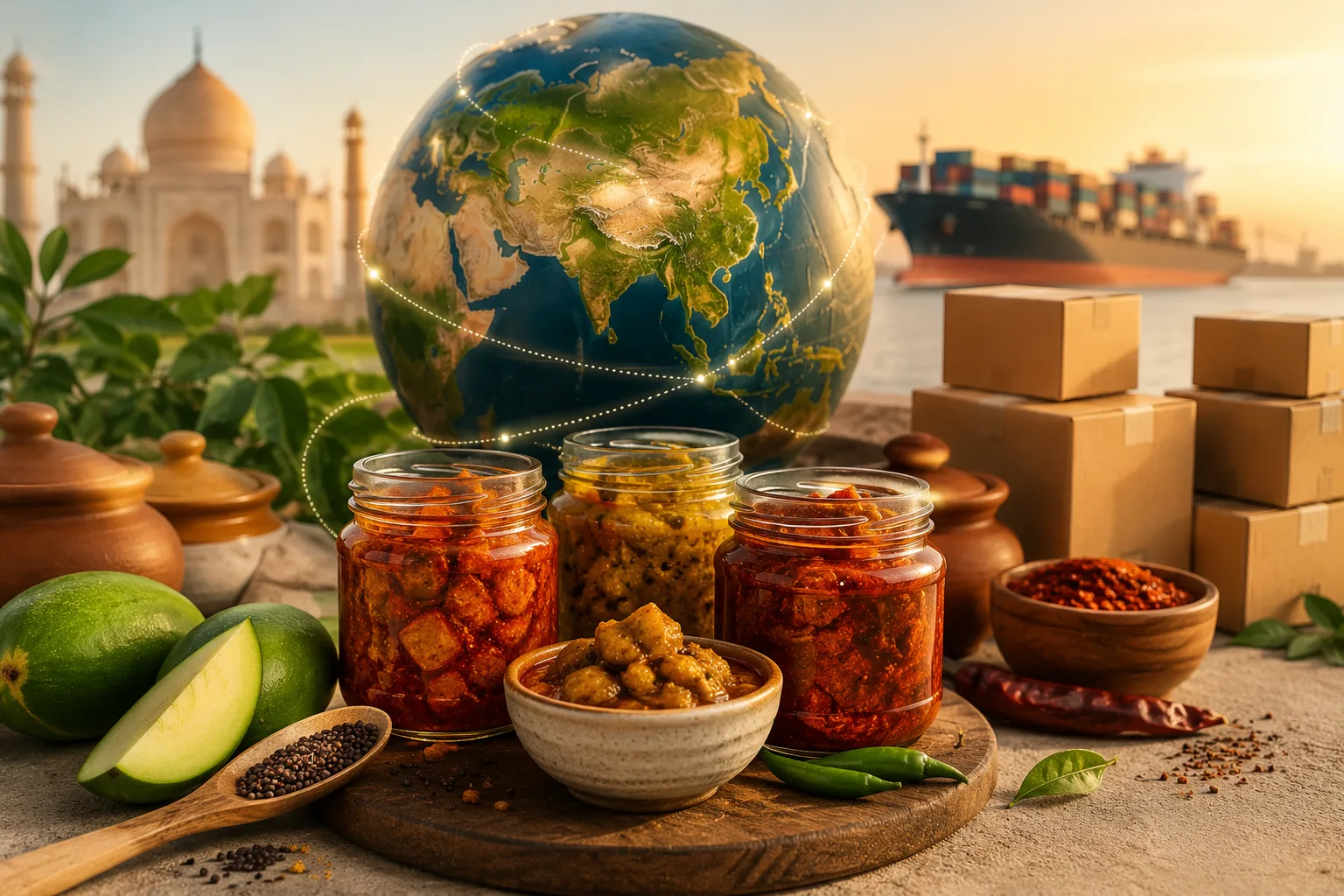
There's something almost poetic about achaar going global. A condiment that sat quietly in clay pots in Indian grandmothers' kitchens — made with mustard oil, raw mangoes, lemon, or mixed vegetables — is now finding shelf space in London delis, New York specialty stores, and Melbourne farmers' markets. The vehicle making this possible? A new generation of direct-to-consumer Indian pickle brands that understand both tradition and digital commerce.
This isn't just a food trend story. It's a masterclass in how deeply local products can scale internationally when founders combine honest storytelling, quality production, and smart branding.
Why Achaar? Why Now?
The global fermented food market has exploded in the past five years, driven by growing consumer awareness around gut health, probiotics, and the desire for bold, complex flavours. Traditional Indian pickles — fermented, oil-cured, or sun-dried — fit this trend perfectly. They're naturally rich in beneficial bacteria, they're intensely flavourful, and they carry centuries of cultural heritage that Western consumers increasingly find compelling.
At the same time, the Indian diaspora — estimated at over 32 million people globally — represents a massive, underserved customer base that's been paying premium prices for inferior imported pickles for decades. D2C brands figured out that this community would pay well for the real thing, delivered reliably to their doorstep.
The Brands Redefining the Category
A handful of Indian pickle brands have emerged as pioneers of this movement, each with a distinct identity and approach:
- Vegan Dukan: One of the early movers in positioning achaar as a vegan superfood, with clean-label packaging that speaks directly to health-conscious urban buyers.
- Pakka Pickle: Built on the promise of grandmother-style recipes, this brand leans heavily into nostalgia and authentic regional variations — from Andhra gongura to Rajasthani ker sangri.
- The Achaari Founders: A Bangalore-based startup that created a subscription model around seasonal, small-batch pickles — turning achaar into a discovery experience.
- Nimbu Mirchi: Focused on international markets with export-ready packaging, allergen labelling, and a product range curated specifically for the global Indian palate.
Market Growth: Indian Pickle Exports (2021–2025)
Approximate export value in USD Million (Indian pickle & condiment segment)
Source: APEDA estimates & industry data
What Makes a D2C Pickle Brand Actually Work
The brands that have survived — and scaled — share a few non-negotiable characteristics:
1. Uncompromising Ingredient Sourcing
The best pickle brands are obsessive about their raw materials. Real cold-pressed mustard oil from specific regions. Mangoes sourced from Ratnagiri or Totapuri orchards. Chillies from Bydagi or Guntur. This isn't just quality control — it's the story. And in a market where consumers increasingly want to know where their food comes from, the sourcing story is the competitive advantage.
2. Packaging That Travels Well and Looks Good
Oil-based pickles are notoriously difficult to ship. Brands that cracked international logistics invested in tamper-evident, leak-proof packaging that still looks premium on a shelf or in an unboxing video. Glass jars with heat-sealed foils are the gold standard, but they add significant weight. Some brands have successfully moved to premium food-grade PET containers for export markets without compromising shelf appeal.
3. Storytelling Over Selling
The most successful achaar brands don't run ads — they share stories. Instagram reels of the founder's mother teaching the original recipe. YouTube videos of the pickling process under the summer sun. Behind-the-scenes content from production. This kind of authentic content performs far better than product-push advertising and builds a community that converts at dramatically lower acquisition costs.
The Export Pathway: Trickier Than It Looks
Going global with food products is not as simple as listing on Amazon International. There are hurdles — import regulations around oil content, labelling requirements for different markets (FSSAI isn't recognised in the EU or US), shelf-life documentation, and customs clearance for agricultural products.
Brands that have successfully navigated this typically partner with a food export consultant in their first year, obtain necessary certifications (ISO 22000, HACCP, organic certifications where applicable), and start with the UK and UAE markets — where the Indian diaspora is concentrated and import regulations are relatively friendly to Indian food products.
Lessons for Aspiring Pickle Entrepreneurs
If you're sitting on a family recipe and wondering whether there's a business in it, here's the honest picture: yes, there is — but only if you treat it as a real business from day one. That means proper FSSAI registration, food safety protocols, consistent production batches, and a real marketing budget.
Start locally. Sell at farmers' markets, organic stores, and through Instagram before dreaming of international shelves. Use that phase to refine your product, your packaging, and your pricing. The global market will still be there when you're ready — and you'll enter it with something far more valuable: proof that people love what you make.
For more insights into growing food businesses in India, explore our Food & Brands coverage where we regularly feature emerging Indian food entrepreneurs.
The Bigger Picture
The achaar revolution isn't really about pickle. It's about the confidence of a new generation of Indian founders who believe that what their grandmothers made in the kitchen has a place on the world's dining tables. They're probably right — and the export numbers are starting to prove it.