
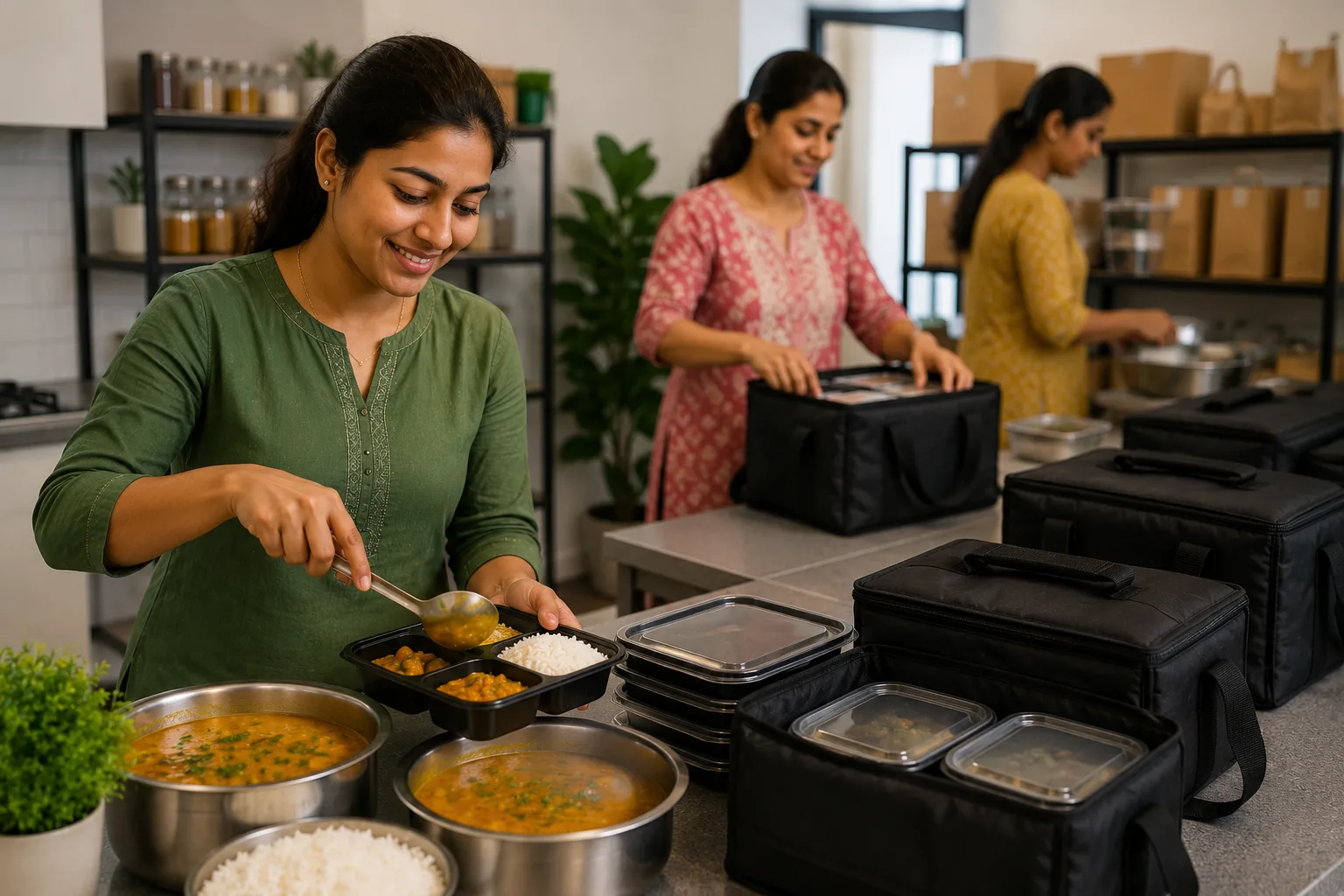
What started as a humble home-cooked meal delivered in a steel dabba has evolved into one of the most promising food business models in urban India. Tiffin services, once considered a neighbourhood side hustle, are now scaling into full-fledged food brands — and the numbers are compelling.
In cities like Mumbai, Hyderabad, Pune, and Ahmedabad, tiffin operators are clocking revenues between ₹3 lakh and ₹25 lakh per month. The shift from local to scalable did not happen by accident — it required the right combination of digital presence, operations discipline, and community trust.
Why the Tiffin Market Is Booming in 2026
Several trends are converging to fuel this growth:
- Rising nuclear families: More Indians are living away from home for work or education, creating sustained demand for hygienic, affordable home-style meals.
- Health consciousness: Post-pandemic, consumers are actively moving away from restaurant oily food toward nutritious home-cooked options.
- Work-from-office return: As companies return to in-office schedules, the lunch box market has revived significantly.
- Digital ordering: WhatsApp, Swiggy, and Zomato have made it easier than ever to manage orders without a dedicated app or tech team.
The Journey from Home Kitchen to Brand
Most successful tiffin businesses follow a predictable evolution. It begins with word-of-mouth among neighbours and colleagues, then transitions to WhatsApp-based ordering, and eventually lands on food aggregator platforms or a standalone website with subscriptions.
The breakthrough usually happens when the founder stops cooking alone and builds a small team — typically 2 to 4 people — and invests in consistent packaging and a delivery routine.
What Makes a Tiffin Service Scale Successfully
Operators who grow beyond ₹5 lakh monthly revenue tend to share a few traits:
- They offer weekly or monthly subscriptions, not just daily orders.
- They have a reliable delivery partner or in-house delivery person.
- They maintain a consistent menu with limited but well-executed options.
- They use customer feedback actively to improve recipes and packaging.
- They market on Instagram and Google Business Profile.
Revenue Potential by City (Monthly Estimates)
*Estimates based on 150–400 daily subscriptions at ₹120–₹180 per meal
The Regulatory Side: FSSAI and Beyond
One area where many home-based tiffin operators stumble is compliance. Operating without an FSSAI registration is risky — not just legally, but also from a trust perspective. Customers in 2026 actively check for food safety credentials before committing to a subscription.
Getting a basic FSSAI licence for a home kitchen costs under ₹500 and takes a few weeks. It is a small investment that significantly improves your credibility. Learn more about Food & Brands compliance and marketing on BusinessTalks.
Technology Tools That Tiffin Operators Are Using
Gone are the days of tracking orders in a notebook. Operators scaling past 100 daily orders typically use:
- WhatsApp Business: For order confirmations, menu updates, and customer support.
- Google Sheets or Tiffin-specific apps: For tracking daily orders and payments.
- Razorpay or PhonePe Business: For digital payment collection and advance subscriptions.
- Instagram: For showcasing daily meals and building community.
The Road Ahead
The tiffin service industry in India is at an inflection point. The operators who treat it as a real business — investing in branding, operations, and customer relationships — will build enterprises that last. Those who rely purely on word-of-mouth will plateau.
If you are running a tiffin service or thinking of starting one, the infrastructure, demand, and tools have never been more accessible. The question is whether you are willing to treat it like the business it truly is.