
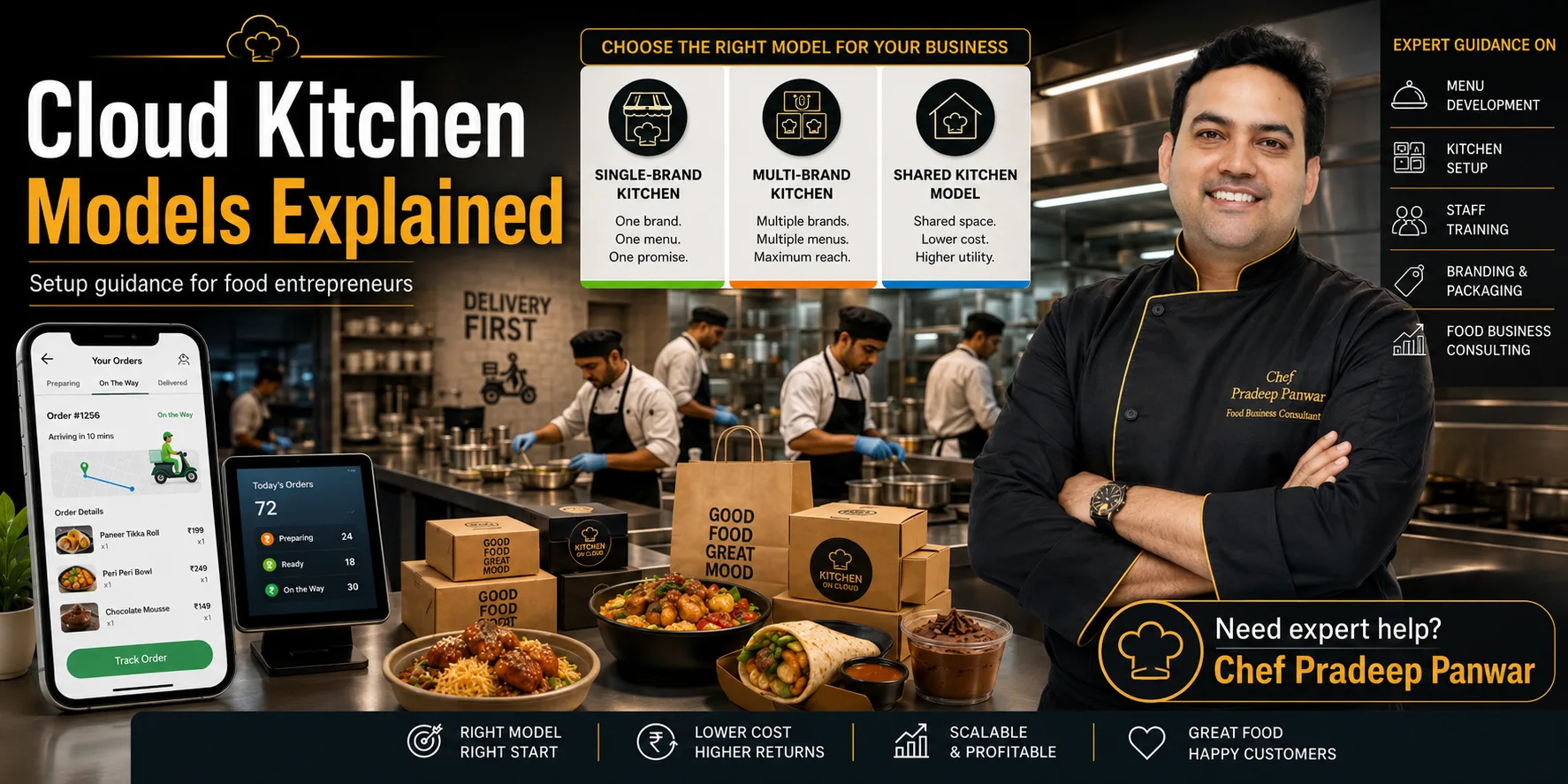
For entrepreneurs considering a food venture in India, the first decision is not simply what cuisine to sell. It is which cloud kitchen model fits the budget, team, location, and growth plan. A single-brand kitchen, multi-brand kitchen, shared kitchen, and delivery-focused restaurant extension each works differently.
What Is a Cloud Kitchen?
A cloud kitchen is a food business designed mainly for delivery and takeaway rather than dine-in service. Orders may come through food delivery marketplaces, a brand website, WhatsApp, phone calls, corporate contracts, or direct subscriptions. The kitchen still needs strong food safety, sourcing, staffing, packaging, and order-management processes, even though customers may never visit the premises.
The biggest advantage is operational focus. The biggest risk is dependence on digital discovery and delivery economics. A restaurant on a busy road can attract walk-ins, while a cloud kitchen must actively earn visibility, reviews, repeat orders, and direct customer relationships.
Model 1: Single-Brand Cloud Kitchen
A single-brand kitchen builds one clear concept around a specific customer need. Examples include biryani, healthy bowls, North Indian meals, premium desserts, office lunches, or regional snacks. This model is easier to communicate because the customer quickly understands what the brand stands for.
Operationally, a focused menu can simplify ingredients and training. Marketing is also more consistent because every campaign supports the same identity. The challenge is concentration risk. If demand for the concept is weak or highly seasonal, the entire business feels the impact.
Model 2: Multi-Brand Kitchen
A multi-brand kitchen operates several delivery brands from one kitchen. The same facility might sell rolls under one name, rice bowls under another, and desserts under a third. This can help a kitchen target multiple search categories and use ingredients across different menus.
However, multi-brand does not mean copying one menu into several logos. Each brand needs a clear position, appropriate pricing, and consistent customer expectations. Too many brands can create inventory complexity, order errors, and weak identities. The model works best when the kitchen has strong standard operating procedures and shared ingredients that reduce waste.
Model 3: Shared or Co-Working Kitchen
In a shared kitchen, a business rents equipped production space instead of building a complete kitchen from scratch. This can reduce setup time and make it easier to test a concept. Some facilities provide utilities, maintenance, storage options, and basic infrastructure.
The trade-off is lower control over the premises and possible restrictions on operating hours, storage, customisation, or expansion. Founders should read agreements carefully and calculate the full monthly cost, including rent, utilities, commissions, packaging, staff, and delivery-related expenses.
Model 4: Existing Restaurant Going Delivery-First
An existing restaurant can create a delivery-only brand or a separate online menu using its current kitchen capacity. This model may be attractive because the business already has equipment, staff, suppliers, and operating experience.
The key is to design food for delivery rather than simply listing the entire dine-in menu online. Some dishes lose texture, temperature, or presentation during travel. A delivery menu should be tested after twenty to thirty minutes in packaging, because that is closer to what the customer actually experiences.
Cloud Kitchen Model Comparison
| Model | Setup Complexity | Brand Focus | Main Risk |
|---|---|---|---|
| Single brand | Low to medium | Very high | Dependence on one concept |
| Multi-brand | High | Spread across concepts | Operational complexity |
| Shared kitchen | Low | Depends on operator | Less control over space |
| Restaurant extension | Medium | Existing or new brand | Poor delivery adaptation |
Understand the Unit Economics Before Launch
A food business can show strong order volume and still struggle with cash flow. Founders should calculate contribution margin per order. Start with the selling price, then subtract food cost, packaging, marketplace commission or promotional cost, payment charges, discounts, and variable labour where applicable.
For example, a ₹300 order does not mean the business earns ₹300. If ingredients cost ₹90, packaging costs ₹25, platform-related costs and discounts absorb another significant portion, and kitchen overheads remain to be paid, the remaining margin can become thin. The exact numbers vary, so every founder should calculate them using actual invoices and platform agreements.
A useful menu should include products with strong contribution margins, easy preparation, dependable quality, and delivery durability. Signature items attract attention, but profitable add-ons can improve the average order value. Beverages, desserts, sides, meal upgrades, and family packs can help when they fit naturally with the main offer.
Branding Matters More When There Is No Dining Room
In a cloud kitchen, packaging, food photography, naming, reviews, and delivery consistency become part of the customer experience. The customer cannot judge the ambience or speak with a waiter. The brand is experienced through a screen, a delivery bag, the condition of the food, and the follow-up after the order.
Use a clear name and visual identity, but do not rely on design alone. Your strongest brand promise might be dependable office lunches, authentic regional taste, healthier comfort food, or late-night convenience. The promise should be specific enough to guide the menu and marketing.
Businesses interested in brand positioning, customer acquisition, and growth campaigns can explore Marketing Insights, while more industry-focused stories are available in Food & Brands.
Build Direct Customer Relationships
Delivery marketplaces can provide reach, but businesses should also work on repeat relationships. This may include opt-in WhatsApp updates, loyalty offers, corporate meal plans, subscription packs, or a simple direct ordering system. The goal is not to force customers away from their preferred platform. It is to create more than one way for customers to remember and reorder from the brand.
- Track repeat rate: A growing base of returning customers is healthier than constant dependence on first-time discounts.
- Monitor complaints: Packaging leaks, late preparation, missing items, and inconsistent portions should be measured.
- Control menu size: A smaller reliable menu can outperform a large confusing one.
- Test delivery quality: Order your own food and inspect it after realistic travel time.
- Protect cash flow: Keep enough working capital for ingredients, salaries, rent, and promotion.
Which Cloud Kitchen Model Is Best?
There is no universal winner. A first-time founder with a strong product may benefit from a focused single-brand model. An experienced operator with systems and shared ingredients may manage multiple brands. A founder testing demand may prefer a shared kitchen, while an existing restaurant can use spare kitchen capacity to build delivery revenue.
The right choice is the model that keeps complexity under control while allowing the business to learn quickly. Start with realistic sales assumptions, not best-case projections. Build a menu around repeatability, calculate margins carefully, and treat packaging and customer service as core operations rather than afterthoughts.
Conclusion
Cloud kitchens can create a lower-infrastructure path into the food business, but profitability still requires discipline. A strong concept, controlled food costs, reliable preparation, useful data, repeat customers, and a recognisable brand are more important than simply being listed on a delivery app.
Begin with one clear customer promise and a menu that can be executed consistently. Test the economics order by order, improve the delivery experience, and expand only when the first model works. That approach gives a cloud kitchen a better chance of becoming a sustainable food brand rather than a short-lived online listing.
Want Expert Help Setting Up Your Cloud Kitchen?
Chef Pradeep Panwar – Culinary & Hospitality Consultant
If you have a cloud kitchen idea but need professional guidance to turn it into a structured and launch-ready food business, you can explore the work and profile of Chef Pradeep Panwar.
Chef Pradeep Panwar is a culinary and hospitality professional associated with Gold Leaf Hospitality Consulting and is also known for his work with food and hospitality brands, including The Charcuterie Co. His experience covers culinary operations, food-business development, restaurant concepts, menu planning, kitchen design, food setup, chef training, and operational guidance.
For entrepreneurs planning a cloud kitchen, professional consulting can be particularly useful in important areas such as:
- Concept development: Turning a food idea into a clear and marketable cloud-kitchen concept.
- Menu planning and engineering: Building a delivery-friendly menu with the right balance of customer appeal, food cost, and profitability.
- Recipe development and standardisation: Creating consistent recipes, portions, preparation methods, and quality standards.
- Kitchen design and workflow: Planning the kitchen for efficient preparation, storage, order handling, and production.
- Food costing and waste control: Improving cost control and reducing unnecessary ingredient or operational waste.
- Staff and chef training: Helping the kitchen team follow consistent preparation and operating procedures.
- Brand and launch preparation: Developing a food concept that is ready to enter the market and build a recognisable identity.
- Growth and scalability: Creating systems that can support future expansion into additional outlets, brands, or locations.
Getting expert guidance does not guarantee business success, but it can help founders avoid common setup mistakes and build stronger systems before investing heavily in equipment, staff, menus, and marketing.
Planning to start a cloud kitchen, café, restaurant, or food brand? Learn more about Chef Pradeep Panwar, his professional background, and his hospitality consulting work through his official website.
Explore Chef Pradeep Panwar's Profile
Note: Before engaging any consultant, discuss the exact project scope, deliverables, fees, timelines, and post-launch support based on your business requirements.