
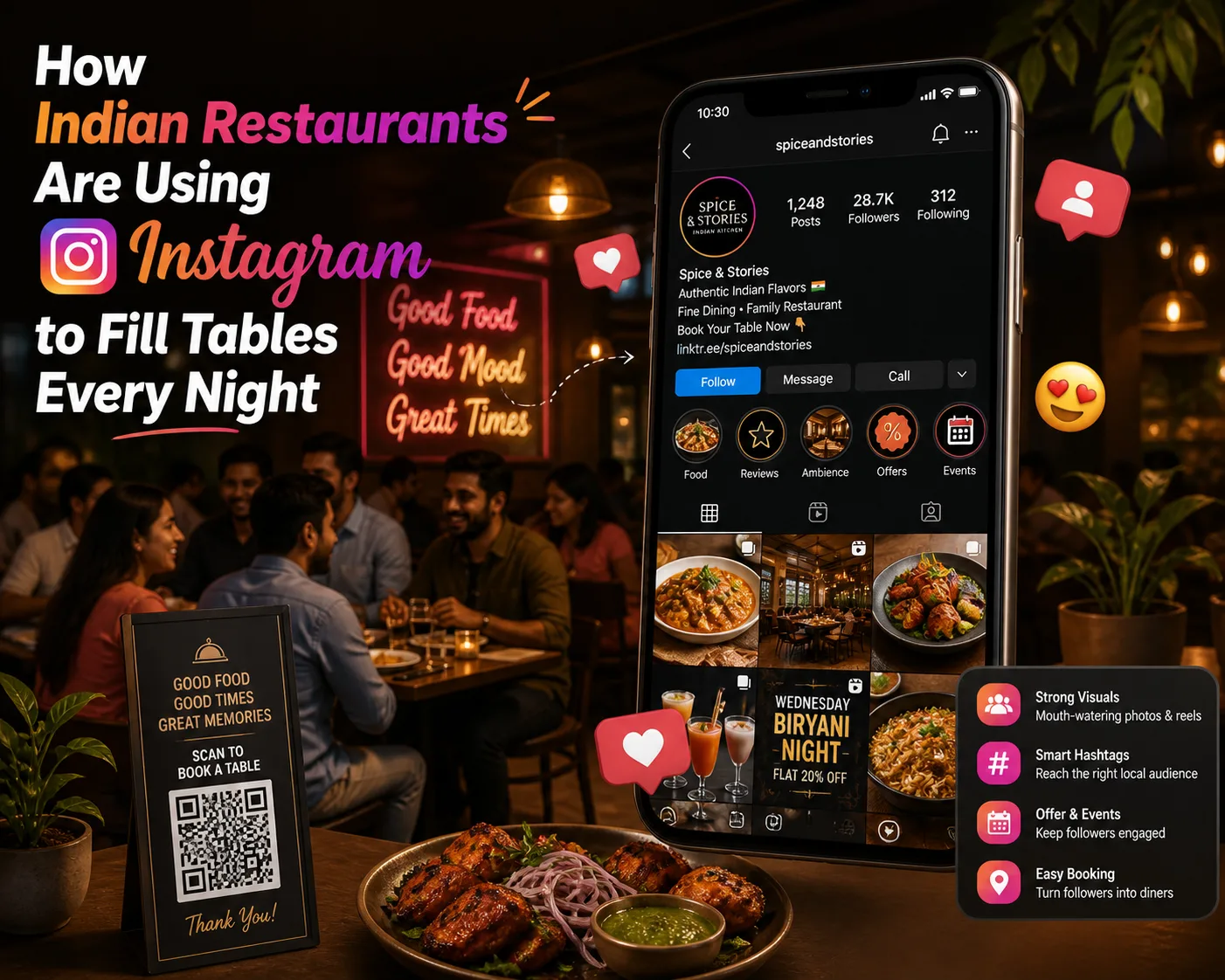
A few years ago, a restaurant's best marketing tool was a good location and word of mouth. Today, the most reliably full restaurants in Indian cities — from a small biryani joint in Hyderabad to a rooftop café in Bangalore — often have one thing in common: a thoughtful, consistent Instagram presence. This isn't coincidence. It's strategy.
This article explores exactly how Indian restaurants are using Instagram to build awareness, drive footfall, and turn casual visitors into raving regulars. Whether you run a cloud kitchen, a fine dining establishment, or a mid-range family restaurant, there's something here you can implement this week.
Why Instagram Works So Well for Restaurants
Food is inherently visual. A beautifully plated dish, a steaming biryani being unveiled, a dessert with the perfect pull — these images and videos trigger an almost visceral response in viewers. Instagram, as a primarily visual platform, is a natural fit for the food industry in a way that few other sectors enjoy.
Moreover, the platform's location tagging and hashtag features mean that someone searching for "best café in Koramangala" or "North Indian food Connaught Place" can organically discover your restaurant without you spending a single rupee on advertising.
The Content Pillars That Actually Drive Results
Successful restaurant Instagram accounts aren't posting randomly. They're working from a content strategy built around a few core pillars:
1. Hero Shots — Your Signature Dishes
Every restaurant has two or three dishes that are most likely to make someone pick up the phone and make a reservation. These are your hero products. Invest in professional photography of these dishes — proper lighting, a clean background, the right plate — and use these images as the backbone of your feed. One stunning photo of your signature butter chicken or your wood-fired pizza can drive bookings for months if it gets shared and saved widely.
2. Behind-the-Scenes Reels
People are fascinated by how food is made. Short Reels showing your chef at work — the toss of a wok, the fold of a paratha, the pour of a sauce — humanise your brand and build emotional connection. These videos also tend to get significantly higher organic reach than static images, thanks to Instagram's ongoing push of Reels content.
3. Customer Moments
Reposting photos that customers tag you in (with permission) does several things at once: it shows social proof, it makes the customer feel celebrated (building loyalty), and it provides you with authentic, zero-cost content. Create a habit of checking your tags daily and reposting the best ones to Stories.
4. Offers, Events, and Announcements
Instagram Stories is your best tool for time-sensitive communication. New weekend menu? Limited-time festival offer? Live music night? Post it to Stories with a swipe-up link or a "message us to book" call to action. The ephemeral nature of Stories creates urgency in a way that feed posts don't.
5. Team and Culture Posts
In a world where consumers increasingly want to know the people behind the brand, introducing your team — your head chef, your servers, the person who makes your fresh bread every morning — creates warmth and differentiation. These posts may not get as many likes as a food shot, but they build the kind of loyalty that keeps customers coming back.
The Hashtag and Location Strategy
For local discovery, the most important Instagram tool isn't hashtags — it's location tagging. Tag your restaurant's location in every post and Reel. Then add location-specific hashtags: #BangaloreEats, #MumbaiFood, #ChennaiRestaurants, #PuneFood. Mix these with broader hashtags like #IndianFood, #FoodPhotography, and dish-specific ones like #BiryaniLovers or #CaffeineAddict.
Limit yourself to 10–15 well-chosen hashtags per post. The era of stuffing 30 generic hashtags is over — Instagram's algorithm has largely neutralised that approach.
Working With Food Influencers on a Budget
You don't need to partner with influencers who have millions of followers. In fact, for local restaurants, micro-influencers (5,000–50,000 followers) in your city often deliver better ROI than macro-influencers, because their audience is local, engaged, and more likely to actually visit.
Reach out with a simple, personal message. Invite them for a complimentary meal in exchange for an honest post or Reel. Track the engagement and the reservation spikes that follow. Build relationships with three to five reliable local food creators and you'll have a consistent word-of-mouth amplification engine.
Converting Followers Into Reservations
Ultimately, Instagram followers who never visit your restaurant are vanity metrics. Convert them with:
- A clear booking link in your bio (use a tool like Linktree to combine multiple links)
- A WhatsApp Business link for direct booking via message
- Regular calls to action in your captions: "Reserve your table for this weekend — link in bio"
- Instagram Ads targeted by pincode to reach people within 5–10km of your location
Conclusion
The restaurants filling their tables consistently in 2026 aren't necessarily the ones with the best food — they're the ones that make their food visible, shareable, and desirable online. Instagram, used with intention and consistency, is one of the most cost-effective marketing channels available to Indian restaurants today. Start with your best dishes, post consistently, engage with your community, and watch the bookings follow. For more food and brand insights, explore Food & Brands on BusinessTalks.in.