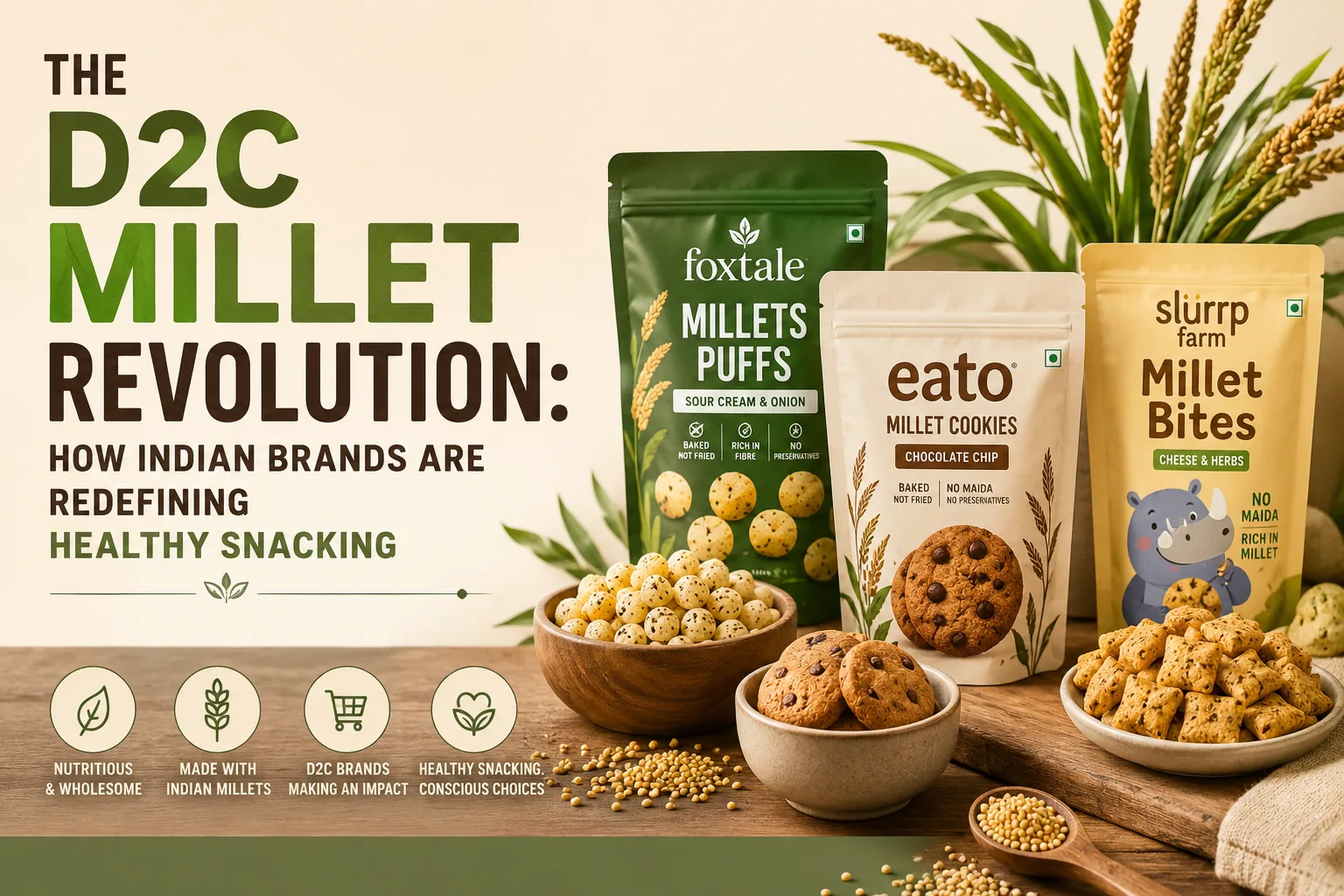
Ever since the UN declared the International Year of Millets, a quiet revolution has been sweeping through Indian kitchens. However, the real transformation isn't just happening in home cooking; it is exploding in the Direct-to-Consumer (D2C) ecosystem. From jowar puffs and ragi cookies to bajra noodles, Indian startups are turning ancient grains into multi-crore modern snacking empires.
As consumers increasingly reject maida (refined flour) and palm oil, millets have emerged as the ultimate superfood. If you are exploring the Food & Brands space, understanding this shift is crucial for your next business venture.
1. Why Millets? The Shift in Consumer Psychology
The post-pandemic Indian consumer is highly label-conscious. Millennials and Gen Z shoppers in Tier 1 and Tier 2 cities are actively reading ingredient lists. Millets check every box for the modern health-conscious buyer:
- Nutritionally Dense: High in protein, dietary fibre, and essential minerals like iron and calcium.
- Gluten-Free: Catering to the rising demographic of individuals with gluten intolerance and celiac disease.
- Low Glycemic Index: Crucial for a country battling high rates of diabetes.
- Eco-Friendly: Millets are drought-resistant, requiring vastly less water than rice or wheat, appealing to eco-conscious buyers.
Market Comparison: Nutritional Value Per 100g
| Grain Type | Protein (g) | Dietary Fibre (g) | Calcium (mg) |
|---|---|---|---|
| Ragi (Finger Millet) | 7.3 | 11.2 | 344 |
| Bajra (Pearl Millet) | 10.6 | 11.3 | 42 |
| Refined Wheat (Maida) | 10.3 | 2.7 | 15 |
| White Rice | 6.8 | 0.4 | 10 |
*Data clearly highlights the superiority of Ragi and Bajra in fibre and calcium compared to staple grains.
2. The Playbook for D2C Millet Brands
Building a successful millet brand requires more than just good ingredients. It requires stellar positioning. The most successful brands in 2026 are utilizing a specific playbook:
A. Taste First, Health Second
The biggest hurdle millets traditionally faced was the perception of being "boring" or "bland diet food." Breakthrough brands have cracked the code by marrying millets with explosive flavors like Peri-Peri, Cream & Onion, and Achari. The pitch is simple: "It tastes like your favorite junk food, but it's made of Ragi."
B. Smart Packaging and Branding
Aesthetic, vibrant packaging is vital for impulse purchases online and on quick-commerce platforms like Zepto and Blinkit. Successful startups use bold colors and clear typography to instantly communicate value propositions like "Baked, Not Fried," "Zero Palm Oil," and "100% Vegan."
C. Influencer-Led Education
D2C brands rely heavily on micro-influencers and fitness coaches to educate the market. A 30-second Instagram Reel showing a mother replacing her child's maida noodles with millet noodles creates immediate relatability and high conversion rates.
3. Supply Chain and Sourcing Challenges
While the demand is skyrocketing, founders face distinct challenges on the supply side. Millets have a lower shelf life once processed due to their natural oil content. Managing inventory carefully and utilizing nitrogen-flushed packaging is critical to preventing rancidity.
Furthermore, sourcing raw millets directly from FPOs (Farmer Producer Organisations) in states like Karnataka, Rajasthan, and Maharashtra helps maintain quality control while increasing profit margins by eliminating middlemen.
Conclusion
The millet revolution is not a passing fad; it is a permanent dietary shift in urban India. For D2C founders, the opportunity lies in constant innovation—moving beyond just chips and cookies into daily staples like millet-based breakfast cereals, quick-cook upma, and specialized sports nutrition. The future of Indian snacking is deeply rooted in its ancient past.