
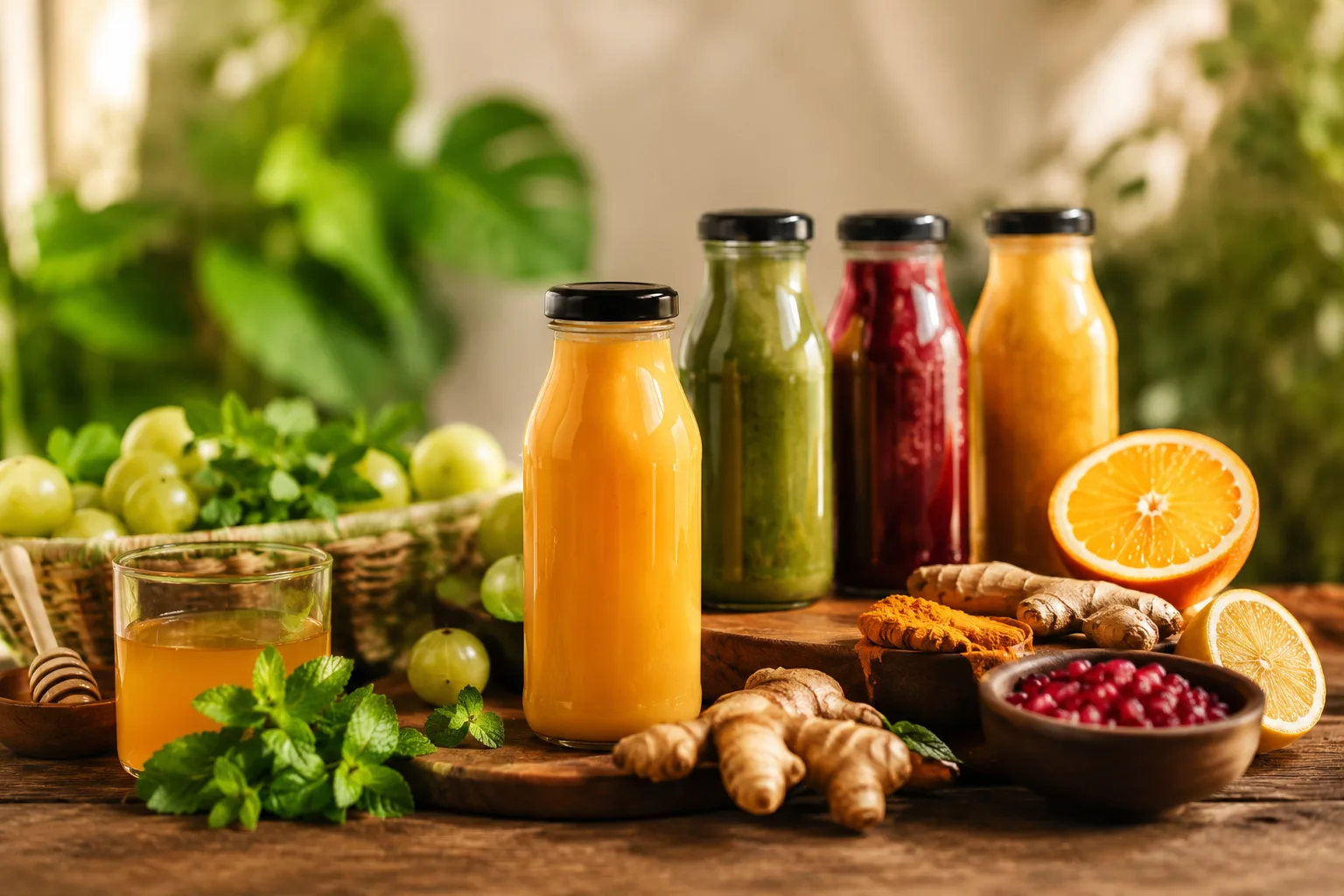
Walk into any supermarket in India today and you'll notice something that wasn't there five years ago — an entire shelf dedicated to immunity-boosting drinks. From amla shots and ashwagandha lattes to giloy juice and moringa smoothies, the Indian health beverage market has transformed remarkably fast. And a growing number of homegrown startups are riding this wave to build serious, scalable businesses.
What's driving this boom, why are certain brands pulling ahead, and what does this space mean for aspiring food entrepreneurs? Let's unpack it honestly.
Why the Timing Has Never Been Better
The shift in Indian consumer mindset around health happened quickly and stuck permanently. People aren't just buying medicines when they're sick anymore — they're actively spending on products that keep them from getting sick in the first place. This isn't a trend; it's a structural change in how urban and semi-urban Indians think about daily wellness.
The generational dimension is equally important. Urban millennials and Gen Z consumers are actively reading ingredient labels, looking up health claims online, and choosing alternatives to sugary colas and artificially flavoured juices. Brands that previously had to educate consumers about why they should drink amla juice now find that customers are already searching for it on their own. The demand has come to the suppliers.
Industry analysts project India's functional beverage segment to grow at over 20% annually through 2028, with the total market potentially crossing ₹10,000 crore within the next three years. That's a significant runway for new entrants who come in with a differentiated approach.
The Ingredients Driving Consumer Demand
India has a natural advantage in this category: a deep Ayurvedic tradition that gives modern health beverages authentic cultural credibility. The ingredients gaining the most traction right now include:
- Giloy (Tinospora cordifolia): Known for its immune-modulating properties, this ingredient saw a massive spike in awareness and has maintained strong consumer interest. Brands incorporating it into ready-to-drink formats have found a loyal audience.
- Ashwagandha: Riding the global adaptogen wave, it now appears in everything from coffee alternatives to sleep drinks, and Indian brands are exporting it to wellness-conscious markets in the US, UK, and Southeast Asia.
- Amla (Indian Gooseberry): One of the richest natural sources of Vitamin C, it is being reimagined as shots, effervescent tablets, candies, and concentrates — far beyond its traditional use as a pickle or chyawanprash component.
- Tulsi and Turmeric: Deeply familiar in Indian kitchens and now being positioned in convenient, on-the-go formats that fit urban lifestyles. The combination of familiarity and functional benefit is a powerful formula.
- Moringa: A nutrient-dense plant gaining significant international attention. Several Indian brands are pioneering moringa-based beverages specifically for export-first business models, finding strong traction in health-focused retail abroad.
D2C vs Retail: Where These Brands Are Actually Growing
The most interesting business model dynamic in this space is the split between direct-to-consumer and traditional retail distribution. Early-stage health beverage brands are almost universally starting D2C — through their own websites, Instagram storefronts, and WhatsApp ordering — for one straightforward reason: margin preservation.
On a D2C channel, a brand might net ₹240 on a ₹299 product. On a retail shelf, after distributor and retailer margins, that same product might realise ₹160–180. For a startup still refining its product and building its customer base, D2C gives the breathing room to invest in quality and brand-building without surrendering margin to intermediaries.
However, brands that have successfully entered premium modern trade formats — high-end supermarkets, organic specialty stores, and airport retail — report a meaningful lift in brand credibility that translates back into stronger D2C performance. There's still something about physical retail placement that signals quality to a certain segment of Indian consumers, particularly those above 35 in Tier 1 cities.
What Separates the Brands That Last
The health beverage space in India is getting crowded fast. Every quick commerce app now features dozens of immunity drinks with similar claims. What separates the brands building genuine loyalty from those that quietly fade?
- Transparent ingredient sourcing: Brands that tell you exactly where their amla comes from, why they chose cold-press over heat extraction, and what the actual ingredient quantities are per serving are building real consumer trust in a category where vague health claims are everywhere.
- Authentic founder stories: Brands rooted in personal health transformation or in a regional Ayurvedic tradition have a natural authenticity advantage that no amount of marketing budget can fully replicate.
- Packaging built for real life: Compact, leak-proof formats that fit in an office bag or a gym kit get used daily. Large glass bottles look premium on a shelf but create friction in actual use, and friction kills repeat purchase habits.
- Subscription models with real retention: A ₹599-per-month subscription for daily wellness shots has dramatically better long-term economics than single-purchase sales. Brands that have cracked subscription retention — through results, habit formation, and personalised engagement — are building far more durable businesses.
Honest Challenges New Entrants Should Know
Cold-chain logistics for products without artificial preservatives can be expensive and operationally complex, especially outside metro areas. FSSAI regulations around health claims require careful navigation — many small brands unknowingly make specific therapeutic claims on their packaging that create compliance risks down the line.
Consumer education also remains a real and ongoing cost. Many of these ingredients are known by name but not understood by benefit. A brand selling a moringa drink invests considerably more in explaining its value than a cola brand spends on its core pitch. That education cost has to be budgeted for, especially in the early months.
What Aspiring Founders Should Take From This
The window in this category is open, but it is narrowing. What worked for early movers in 2021–2023 won't be as accessible in the next two years as more established players enter the space with deeper pockets. The brands that will win from here are those that go deep on one ingredient or Ayurvedic tradition, build community around visible health results, and solve the subscription retention challenge early.
Indian consumers are willing to pay for health — but they need to feel it working. Your entire brand strategy should help customers experience results, and then systematically convert those results into reviews, referrals, and social proof that do your marketing for you.
For more on building a food brand from the ground up, explore our Food & Brands section. If you're ready to launch your own product, our resources in Local Businesses cover the operational realities of scaling a food business beyond your first 100 customers.