
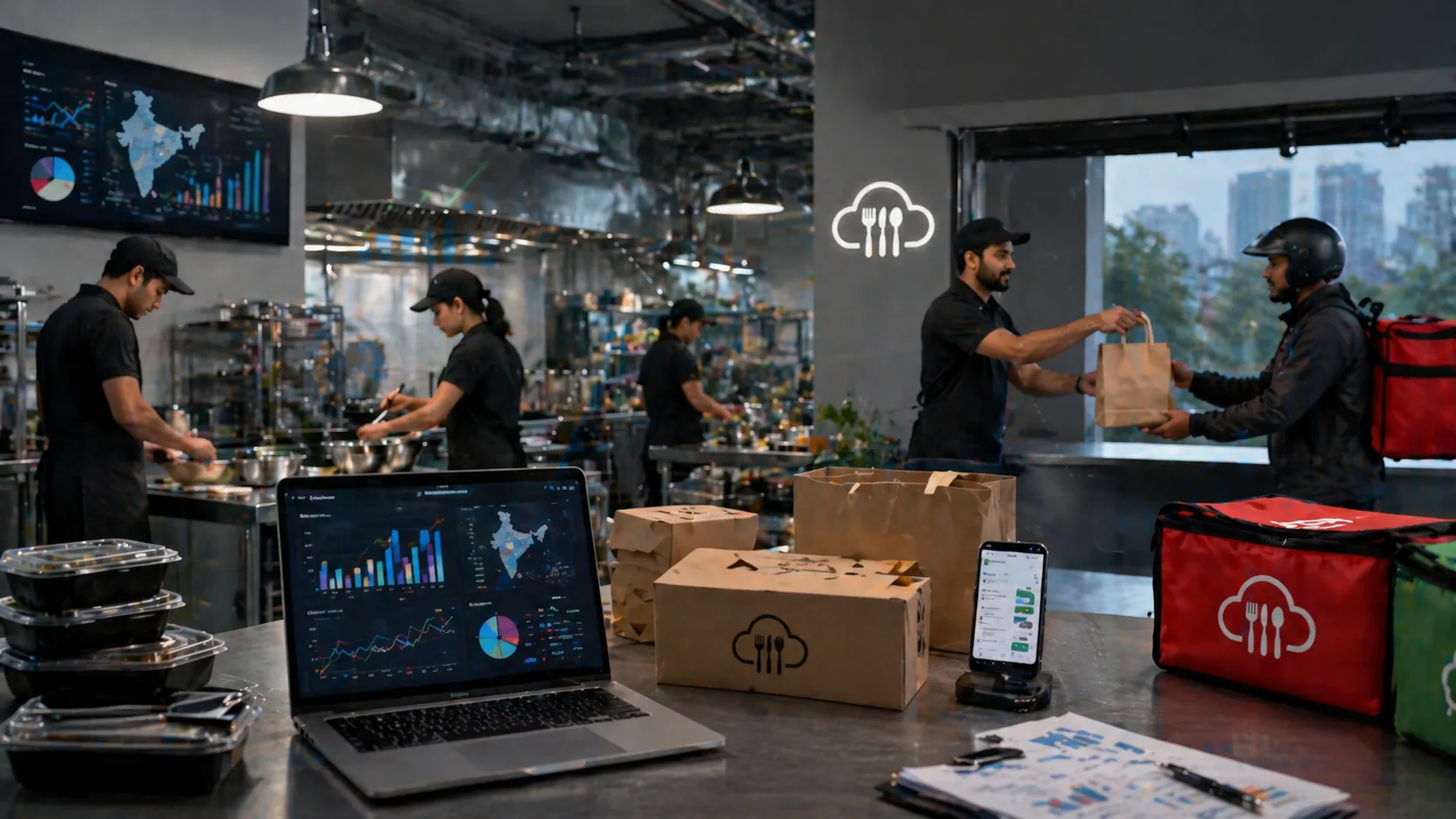
The food and beverage landscape in India has undergone a massive paradigm shift. The traditional dine-in restaurant model, characterized by high real estate costs and massive overheads, is increasingly being challenged by the agile, tech-driven cloud kitchen model. Also known as ghost kitchens or dark kitchens, these delivery-only facilities are redefining how brands scale and how consumers dine.
What is Fueling the Growth?
The explosive growth of cloud kitchens is driven by a confluence of factors. Deep smartphone penetration, the rise of food delivery aggregators like Swiggy and Zomato, and changing consumer habits—especially a preference for dining at home post-pandemic—have created a perfect storm for this business model. Brands can now launch new concepts in weeks rather than months, testing menus with real-time data feedback.
To understand the branding side of this phenomenon, read our deep dives in Food & Brands.
Data Insights
The following chart illustrates the projected market revenue growth of cloud kitchens in India over a five-year span, highlighting the massive compounding effect of digital-first dining.
Operational Advantages
Cloud kitchens offer unprecedented operational advantages. By eliminating front-of-house staff, premium real estate leases, and expensive interior decor, operators can focus their capital entirely on food quality, packaging, and marketing. Furthermore, a single kitchen infrastructure can house multiple distinct brands. For example, a single commercial kitchen could simultaneously operate a high-end sushi brand, a gourmet burger joint, and a vegan salad company.
- Lower Barrier to Entry: Starting a cloud kitchen requires a fraction of the capital needed for a traditional restaurant.
- Data-Driven Menus: Menus can be optimized dynamically based on search trends and order volumes in specific pin codes.
- Scalability: Expanding to a new neighborhood simply requires renting a commercial kitchen space, not securing prime street frontage.
Conclusion
The cloud kitchen model is not just a passing trend; it is the future infrastructure of food delivery. As technology continues to improve logistics and predictive analytics, these kitchens will become even more efficient. For entrepreneurs in the F&B sector, ignoring the cloud kitchen revolution means missing out on the fastest-growing segment of the industry.