
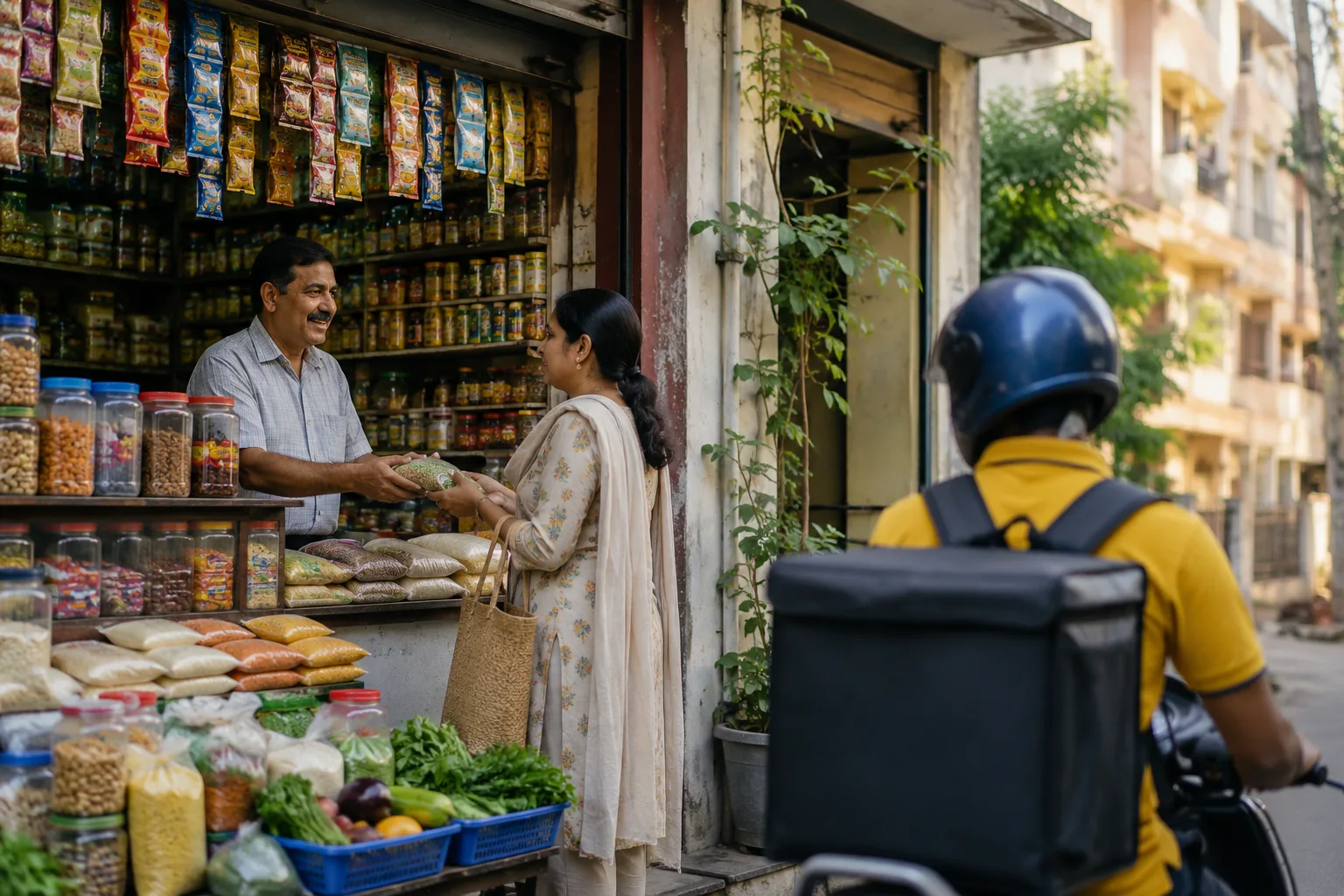
Why Indian Kirana Stores Are Still Surviving the Quick Commerce Boom
Over the last three years, quick commerce platforms like Blinkit, Zepto, and Instamart have changed how urban Indians buy groceries. Customers in major cities can now receive milk, snacks, vegetables, and daily essentials within 10 to 20 minutes.
This rapid growth has created a common assumption: traditional kirana stores will slowly disappear. But the ground reality across India tells a far more complicated story.
While quick commerce is growing aggressively in metro cities, millions of local kirana stores continue to survive — and in many areas, even grow — by adapting to changing consumer behavior rather than competing directly on speed alone.
The Scale of India's Kirana Economy
India has an estimated 12 to 13 million kirana stores, making it one of the largest retail networks in the world. These small neighborhood shops continue to dominate a major share of India's grocery market, especially in Tier 2, Tier 3, and rural regions.
| Retail Segment | Estimated Presence in India | Primary Strength |
|---|---|---|
| Kirana Stores | 12–13 Million+ | Trust & Local Reach |
| Quick Commerce Platforms | Major Metro Cities | Ultra-Fast Delivery |
| Supermarkets | Urban & Semi-Urban Areas | Large Product Variety |
Quick Commerce Growth vs Kirana Dominance
Although quick commerce has expanded rapidly in urban India, kirana stores still dominate overall grocery retail volume across the country.
Illustrative representation based on broader Indian grocery retail market trends.
How Kirana Stores Are Adapting
Instead of trying to become miniature versions of quick commerce startups, many local stores are making smaller practical changes:
- accepting UPI payments,
- taking orders on WhatsApp,
- offering local home delivery,
- maintaining digital inventory records,
- and using social media for local promotions.
In several cities, neighborhood stores now receive regular orders through WhatsApp groups where local residents share grocery requirements directly with shop owners.
Digital Adoption Among Local Kirana Stores
| Technology Adoption | Common Usage | Business Benefit |
|---|---|---|
| UPI Payments | Widely Adopted | Faster Transactions |
| WhatsApp Orders | Growing Rapidly | Customer Convenience |
| Inventory Software | Moderate Adoption | Better Stock Management |
| Social Media Promotion | Increasing Adoption | Local Visibility |
The Trust Advantage Still Matters
One of the biggest strengths of kirana stores is something technology platforms still struggle to fully replace: personal relationships.
Local shop owners often:
- know customer preferences,
- allow informal monthly credit,
- recommend alternative products,
- and provide flexible service during emergencies.
The Future Is Likely Hybrid, Not Winner-Takes-All
The Indian grocery market is large enough for both quick commerce platforms and local kirana stores to coexist. Different customer segments have different priorities:
- some value ultra-fast delivery,
- others prioritize trust and flexibility,
- while many consumers use both depending on the situation.
Final Thoughts
India's kirana stores have survived supermarkets, malls, and e-commerce disruption over the last two decades. Quick commerce represents another major shift, but local retailers are already adapting in practical ways.
The businesses most likely to survive are not necessarily the fastest, but the ones that understand their customers best.