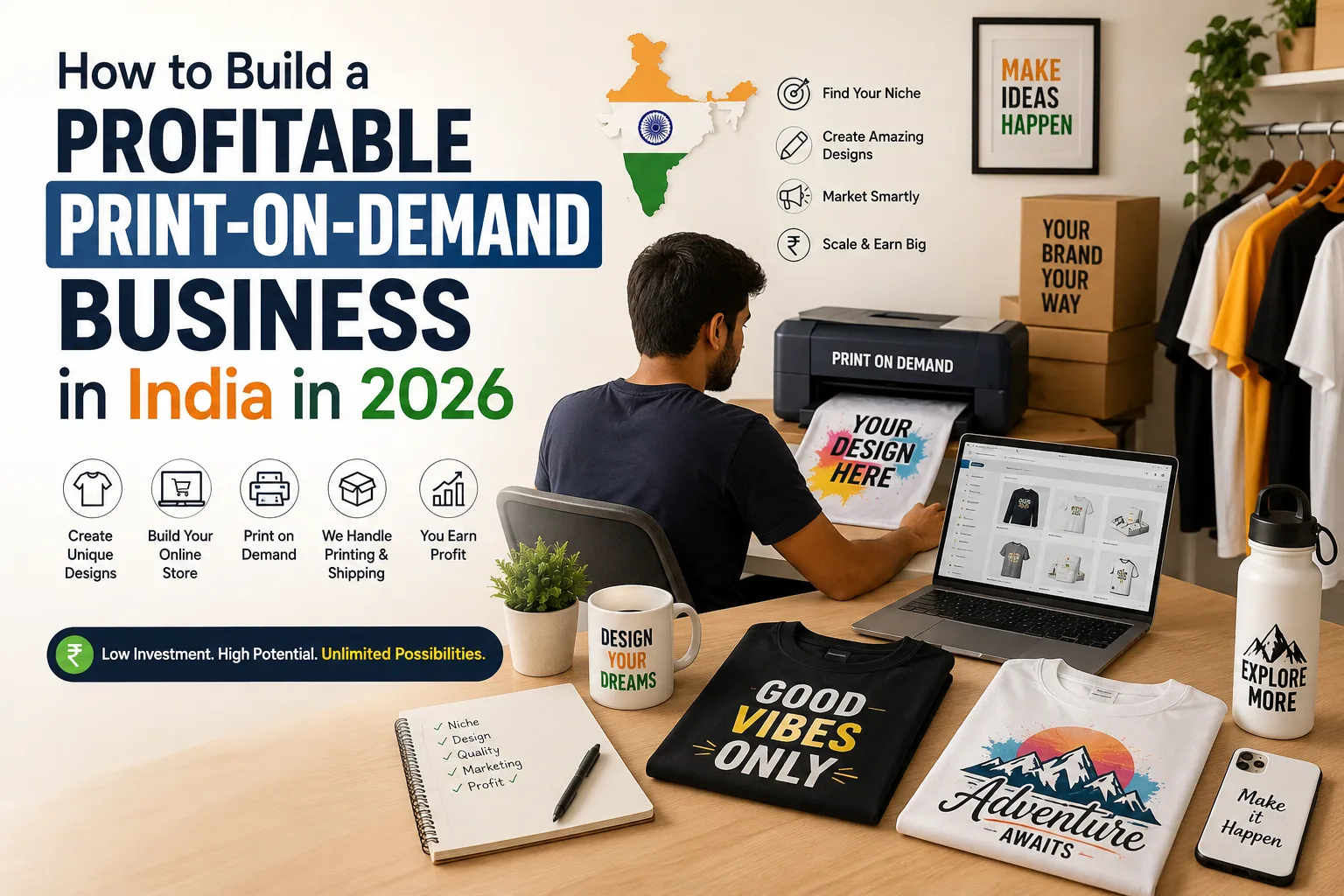
If you have an eye for design but very little money to invest, print-on-demand (POD) might be the most forgiving business model you can start this year. There's no warehouse to rent, no boxes of unsold stock gathering dust, and no need to guess how many units to buy upfront. You upload a design, a printing partner produces the item only after someone orders it, and the product ships directly to your customer. You keep the margin in between.
In 2026, with cheaper printing partners, faster logistics, and design tools almost anyone can learn, POD has quietly become one of the easiest doorways into Business & Income for first-time founders in India. This guide walks you through how it actually works, what it really costs, and how to turn it into a brand that pays you every single month.
What Print-on-Demand Actually Is
Think of POD as a partnership. You handle the creative and the customer; your printing partner handles production and shipping. When a buyer orders a t-shirt carrying your design, the order is sent automatically to the printer, who prints, packs, and dispatches it under your brand name. You never touch the physical product.
This matters because the single biggest reason small product businesses fail is dead inventory, money locked up in stock that doesn't sell. POD removes that risk almost entirely. Your only real upfront cost is your time and a little money for testing ideas.
The Real Startup Costs
Let's be honest about money, because vague promises of "start with zero investment" rarely hold up. You can technically begin for free, but a realistic budget to launch properly and test a few designs looks like the breakdown below.
Data Insights
| Expense | Bare Minimum | Recommended Start |
|---|---|---|
| Design tools | Free plan | Rs 500 / month (pro) |
| Sample products | Rs 0 | Rs 1,500 |
| Online store / domain | Marketplace (free) | Rs 2,000 / year |
| Test ad budget | Rs 0 | Rs 5,000 |
| Total to launch | Rs 0 | ~ Rs 9,000 |
As the numbers show, you can get a serious test running for under Rs 10,000. Compare that with a traditional retail shop, where rent alone can swallow lakhs before you sell a single item.
Choosing the Right Platform
Your platform choice shapes your margins and your headaches. A few popular routes for Indian sellers:
- Marketplace POD: List on large marketplaces that bring their own traffic. Easy to start, but competition is brutal and margins are thin.
- Your own store: Build a branded storefront and connect a POD supplier. More control, far better margins, but you must drive your own traffic.
- Hybrid: Sell on a marketplace first to learn what works, then move winning designs to your own store. This is what most smart founders end up doing.
Whatever you pick, order a sample of your own product before launching. Hold it, wash it, photograph it. If you wouldn't proudly gift it to a friend, your customers won't repeat-buy it either.
Finding a Niche That Pays
The biggest mistake beginners make is designing for "everyone." Generic motivational quotes on plain white t-shirts are a race to the bottom. The money is in niches, small and passionate communities who feel seen by your designs.
Think regional pride, profession-based humour, hobby tribes, and fan cultures. A shirt with a clever line about being a Tamil software engineer, or a mug aimed at overworked chartered accountants, will outsell a bland "Be Positive" design every time. Narrow beats broad. The tighter your audience, the easier your marketing becomes.
Designing Products People Actually Buy
You don't need to be a trained artist. You need taste and consistency. A few principles separate hobby sellers from profitable ones:
- Readable beats fancy. A bold, clean message reads well on a thumbnail and sells better than intricate art that turns to mud when printed small.
- Design in collections. One design is a gamble. Ten designs around one theme let you discover the winner and build a real catalogue.
- Respect copyright. Never lift logos, characters, or photos you don't own. It's the fastest way to get your store shut down for good.
If design feels intimidating, lean on the growing list of affordable tools and templates. Many Indian creators run entire POD brands using nothing more than a free design app and a sharp sense of what their audience finds funny.
Marketing Without a Big Budget
A beautiful store with no visitors makes zero rupees. Your first sales almost always come from places where your niche already gathers. Instead of buying expensive ads on day one, do this:
- Post your designs where your community already hangs out, in relevant groups, hashtags, and short-form video.
- Let the product be the content. A quick reel of someone unboxing or wearing your design is worth more than a polished ad.
- Reinvest your first profits into small, tightly targeted ads only after you know which designs people genuinely want.
For a deeper playbook on reaching customers affordably, our Marketing Insights section is full of low-budget tactics built for Indian small businesses.
Turning It Into Real Income
POD rewards patience and iteration, not luck. Most successful sellers churn through dozens of duds before a single design takes off. The trick is to launch cheaply, kill what doesn't work fast, and pour your energy into the few products that do. Once you have two or three reliable sellers, you own a small machine that earns while you sleep, and a brand you can expand into new products.
Final Thoughts
Print-on-demand won't make you rich overnight, and anyone promising that is selling you something. But as a low-risk way to test ideas, build a brand, and earn from your creativity, few models in 2026 are this accessible. Start small, study your numbers, treat your customers well, and let the winners reveal themselves. The entrepreneurs who win at POD aren't the most artistic, they're simply the most consistent.