
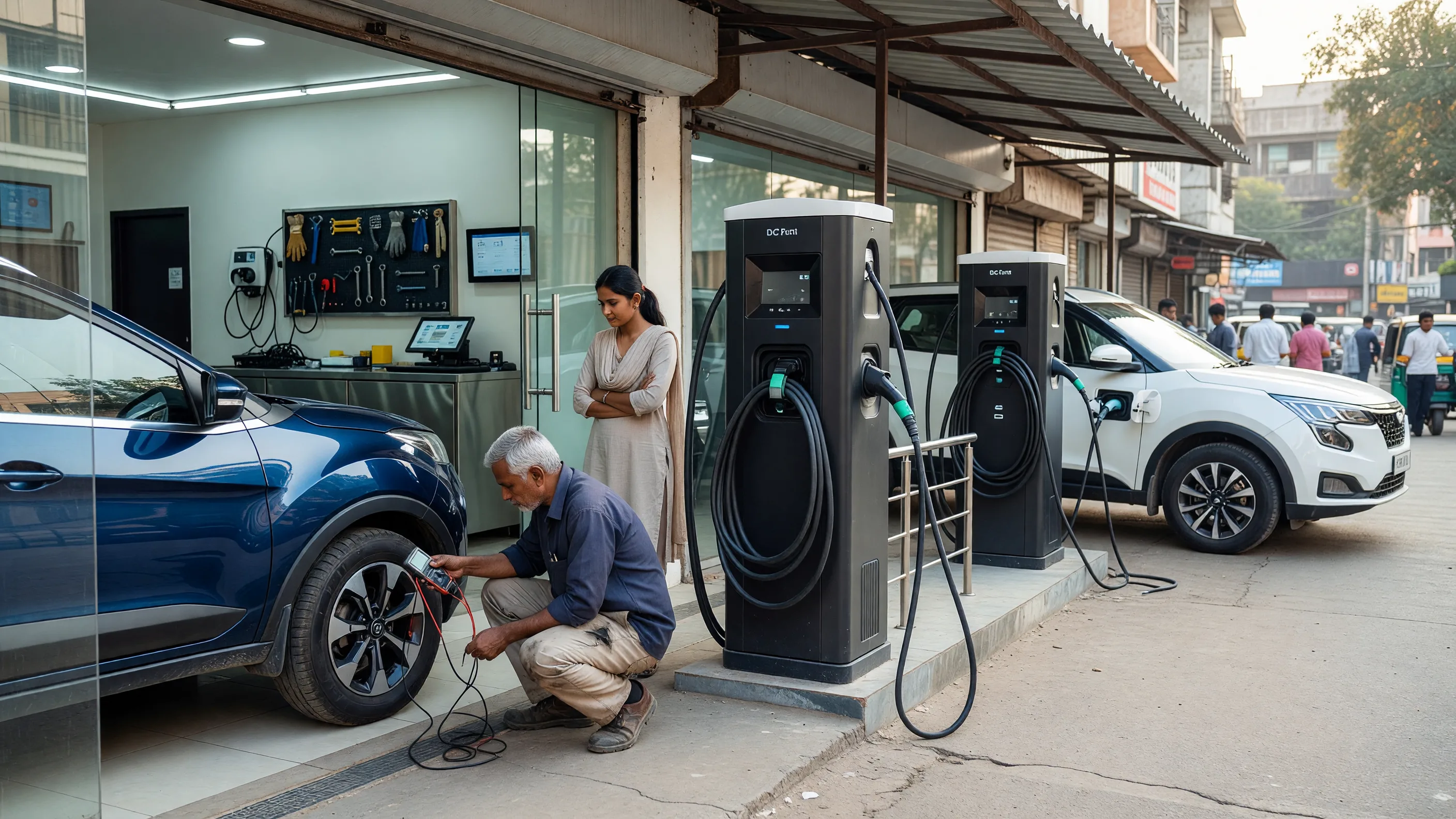
The electric vehicle (EV) revolution in India is no longer a future trend; it is already shaping the way people travel, commute, and invest. With rising fuel prices, better EV options, growing awareness, and government-backed infrastructure support, the demand for reliable EV charging stations is increasing across cities, highways, commercial hubs, residential societies, and public parking spaces.
For entrepreneurs, this creates a strong business opportunity. Starting an EV charging station franchise in India in 2026 can become a profitable and future-ready venture, especially when the right location, charger type, electricity connection, and franchise partner are selected carefully.
Why EV Charging Stations Are a Growing Business Opportunity
One of the biggest challenges for EV adoption is range anxiety, which means the fear of running out of battery before finding a charging point. As more people buy electric two-wheelers, cars, three-wheelers, and commercial EVs, the need for accessible public charging stations is growing rapidly.
The Indian government has also been supporting EV infrastructure through schemes such as PM E-DRIVE and state-level EV policies. The PM E-DRIVE scheme includes support for public charging infrastructure, but eligibility, subsidy percentage, and application route may vary depending on the latest government guidelines, state policy, and project category.
If you are looking for a future-focused idea in Business & Income, an EV charging franchise can offer recurring revenue, long-term demand, and relatively low daily operational involvement after the initial setup is completed.
Steps to Start an EV Charging Station Franchise
- Choose a High-Demand Location: Location is the most important factor in this business. Highways, petrol pumps, malls, hotels, office complexes, IT parks, hospitals, residential societies, and busy parking areas are ideal options.
- Select the Right Charger Type: Slow AC chargers are suitable for apartments, offices, and long-stay parking areas. DC fast chargers are better for highways, commercial hubs, fleet operators, and locations where customers need quick charging.
- Compare Franchise Partners: Companies such as Tata Power, ChargeZone, Statiq, Ather Grid, Jio-bp Pulse, and other EV charging networks may offer partnership or franchise models. Compare their charger quality, app support, revenue-sharing model, maintenance support, and brand trust before finalising.
- Check Electricity Load and Approvals: EV charging stations require a proper electricity connection, sanctioned load, safety equipment, earthing, and sometimes transformer upgrades. You should consult your local DISCOM or electricity board before starting the installation process.
- Understand Government Policies: Central and state policies may provide support for EV infrastructure, but benefits are not always automatic. Check the latest PM E-DRIVE guidelines, state EV policy, DISCOM rules, and local authority requirements before planning your investment.
- Plan Extra Revenue Streams: A charging station can earn more when combined with a small cafe, convenience store, paid parking, advertisement space, vehicle accessories counter, or fleet charging contracts.
Data Insights: Indicative EV Charging Setup Cost
The setup cost depends on the charger type, charger capacity, brand, installation work, electricity load, transformer requirement, software integration, and site development. The graph below shows an indicative cost comparison for different charger categories.
Average Setup Cost Comparison
Level 1
Slow Charger
Level 2
AC Charger
Level 3
DC Fast Charger
Note: These are indicative costs. Final investment may increase depending on land, civil work, electrical load, transformer, charger capacity, software, branding, and maintenance requirements.
Investment and Profitability
The investment required for an EV charging station can vary from a few lakhs to several lakhs depending on the type of charger and scale of the station. A basic AC charging setup may be suitable for offices, societies, and small commercial spaces, while a DC fast charging station requires higher investment but can serve more customers in less time.
The main revenue comes from the difference between the electricity cost paid by the operator and the charging fee collected from EV users. For example, if the operator pays a commercial electricity rate and charges customers at a higher per-unit rate, the margin becomes the core earning. However, profitability depends heavily on utilisation rate, location footfall, charger uptime, electricity tariff, maintenance cost, and revenue-sharing terms with the franchise partner.
Expected ROI Timeline
In most cases, the return on investment may take around 3 to 5 years, depending on usage and location quality. A station on a busy highway, near a commercial complex, or connected with fleet operators can recover investment faster than a low-traffic location.
To improve ROI, entrepreneurs should focus on high-visibility locations, reliable charger uptime, easy digital payment options, clear pricing, customer support, and additional income sources such as food, parking, advertising, or vehicle-related services.
Best Locations for EV Charging Stations
- Highways and expressways
- Petrol pumps and fuel stations
- Malls and shopping complexes
- Hotels, restaurants, and cafes
- Office buildings and IT parks
- Residential societies and apartments
- Hospitals, colleges, and public parking areas
- Fleet parking areas for cabs, delivery vehicles, and logistics companies
Challenges You Should Consider
Although the EV charging business has strong future potential, it also comes with some challenges. The initial setup cost can be high, especially for DC fast chargers. Electricity load approval may take time, and charger utilisation may be low in the early months. Maintenance, software downtime, payment issues, and competition from nearby stations can also affect profitability.
That is why proper market research, location analysis, and franchise comparison are essential before investing.
Conclusion
Starting an EV charging station franchise in India in 2026 can be a profitable and future-ready business idea for entrepreneurs who are willing to invest in green mobility infrastructure. The opportunity is especially strong in high-traffic areas, highways, commercial centres, and locations with growing EV usage.
By choosing the right location, working with a reliable charging network, understanding electricity and government policy requirements, and adding customer-friendly amenities, you can build a sustainable EV charging business with long-term income potential.