
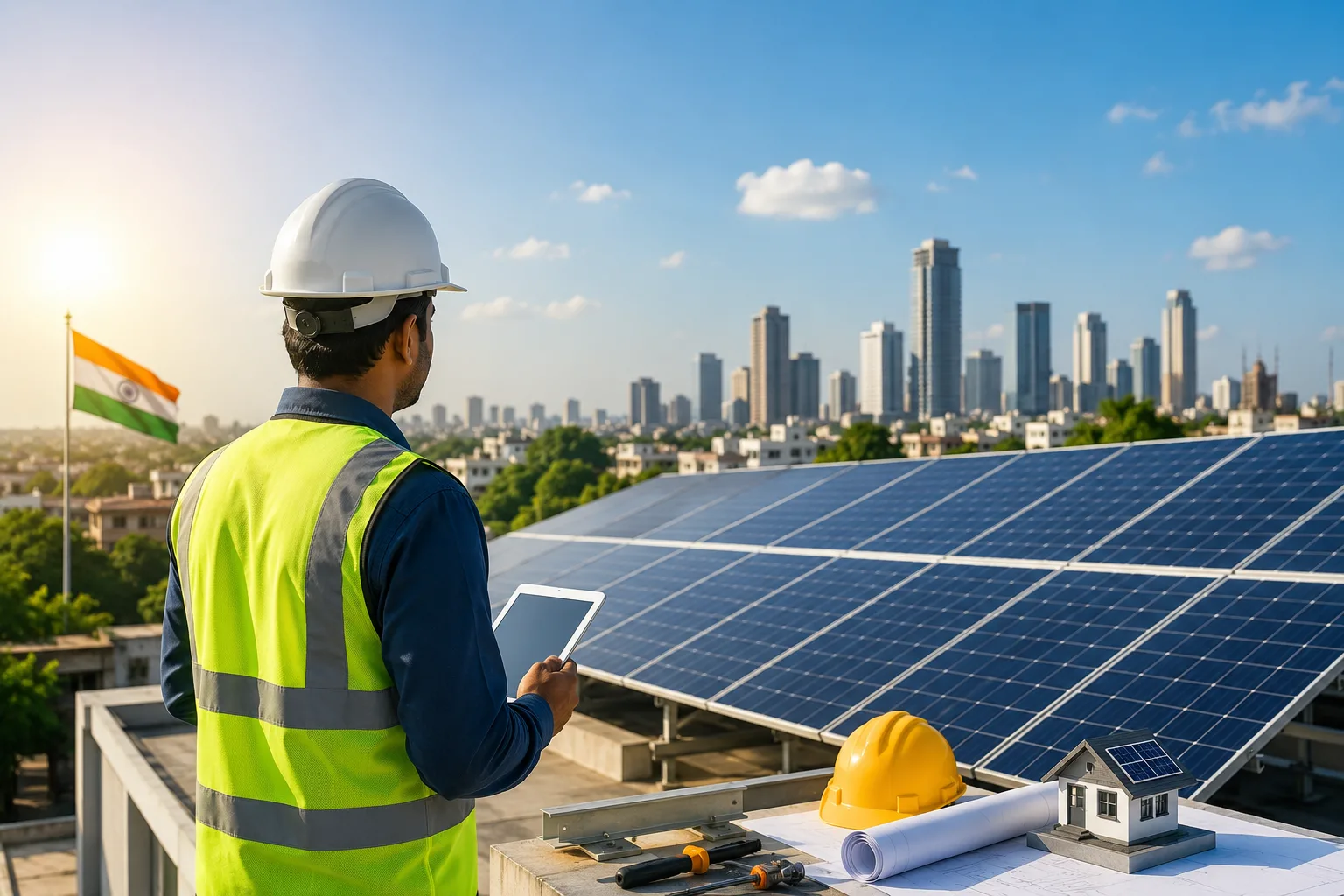
India's transition towards renewable energy is not just a government initiative; it has become a grassroots movement. As electricity tariffs rise and environmental awareness grows, residential and commercial property owners are rapidly adopting solar energy. If you are an entrepreneur looking for a future-proof, high-margin venture, starting a solar panel installation business in India in 2026 represents one of the most lucrative opportunities available.
In this comprehensive guide, we at Business & Income will walk you through everything you need to know—from licensing and supplier selection to marketing your services effectively and generating a consistent pipeline of high-ticket clients.
1. Understanding the Market Potential
The Indian solar market has evolved significantly. Previously dominated by massive solar parks, the focus has drastically shifted to rooftop solar installations. Government subsidies under schemes like PM Surya Ghar Muft Bijli Yojana have incentivised middle-class households to invest in solar setups. For a local installation business, this means your target audience has expanded from just large factories to everyday homeowners.
Data Insights: Rooftop Solar Adoption Growth in India
*The visual above illustrates the estimated gigawatt (GW) addition in the rooftop solar sector.
2. Business Registration and Licensing
To operate legally and build trust with clients, proper documentation is non-negotiable. Here is what you need:
- Company Registration: Register as a Private Limited Company or LLP to limit personal liability.
- GST Registration: Mandatory for purchasing panels from manufacturers and invoicing clients.
- MSME/Udyam Registration: This provides access to collateral-free bank loans and government subsidies.
- Electrical Contractor License: Issued by the state electricity board. You will need a certified electrical engineer on your payroll to acquire this.
- Vendor Empanelment: To pass government subsidies to your clients, you must be an empanelled vendor with your local DISCOM (Distribution Company).
3. Sourcing the Right Equipment
Your reputation will depend heavily on the quality of the solar panels and inverters you install. Avoid cutting corners by sourcing cheap, unbranded materials. Partner with Tier-1 manufacturers such as Waaree, Vikram Solar, Tata Power Solar, or Adani Solar.
When selecting inverters, opt for reliable brands like Growatt, Solis, or Microtek. Building a strong relationship with regional distributors will ensure you get bulk discounts and priority technical support during complex installations.
4. Building Your Core Team
A solar business is service-oriented. You cannot scale without a reliable team. In your first year, your core team should include:
- Site Surveyor/Designer: To assess the roof space, calculate load requirements, and create an AutoCAD design of the solar array.
- Certified Electricians: Professionals who handle the AC/DC wiring, grounding, and inverter connections safely.
- Installation Technicians: Laborers skilled in mounting structures securely to prevent wind damage or roof leaks.
- Sales Executive: Someone who can explain ROI and payback periods to potential clients.
5. Crafting a Winning Marketing Strategy
Having the best team means nothing if you don't have leads. At BusinessTalks.in, we consistently see that local service businesses thrive on hyper-local digital marketing. Here is your action plan:
Google My Business (GMB): 80% of your initial leads will come from people searching "solar panel installation near me." Ensure your GMB profile is fully optimized with photos of completed sites and 5-star customer reviews.
Educational Content: Create short videos or blog posts explaining how subsidies work in your specific state. For more tips on content, check out our Marketing Insights section.
Referral Programs: Offer a ₹5,000 cash bonus or free panel cleaning service for a year to any past client who refers a new customer. Solar is a high-trust purchase, and word-of-mouth is incredibly powerful.
6. Managing Finances and Profit Margins
A typical 3kW residential system in 2026 costs around ₹1.5 Lakhs to ₹1.8 Lakhs to install (pre-subsidy). Your raw material cost (panels, inverter, mounting structure, wires) will consume about 65-70% of this budget. Labor, transportation, and DISCOM liaisoning take another 10-15%. This leaves a healthy net profit margin of 15% to 20% per residential installation.
Commercial installations (e.g., 50kW for a school or hospital) yield slightly lower percentage margins but massive absolute profits due to the sheer scale of the project.
Conclusion
Starting a solar panel installation business in 2026 is highly profitable but requires technical diligence, strict adherence to safety standards, and aggressive local marketing. Focus on quality installations over cheap pricing, secure your DISCOM empanelment early, and let the sun power your entrepreneurial success.