
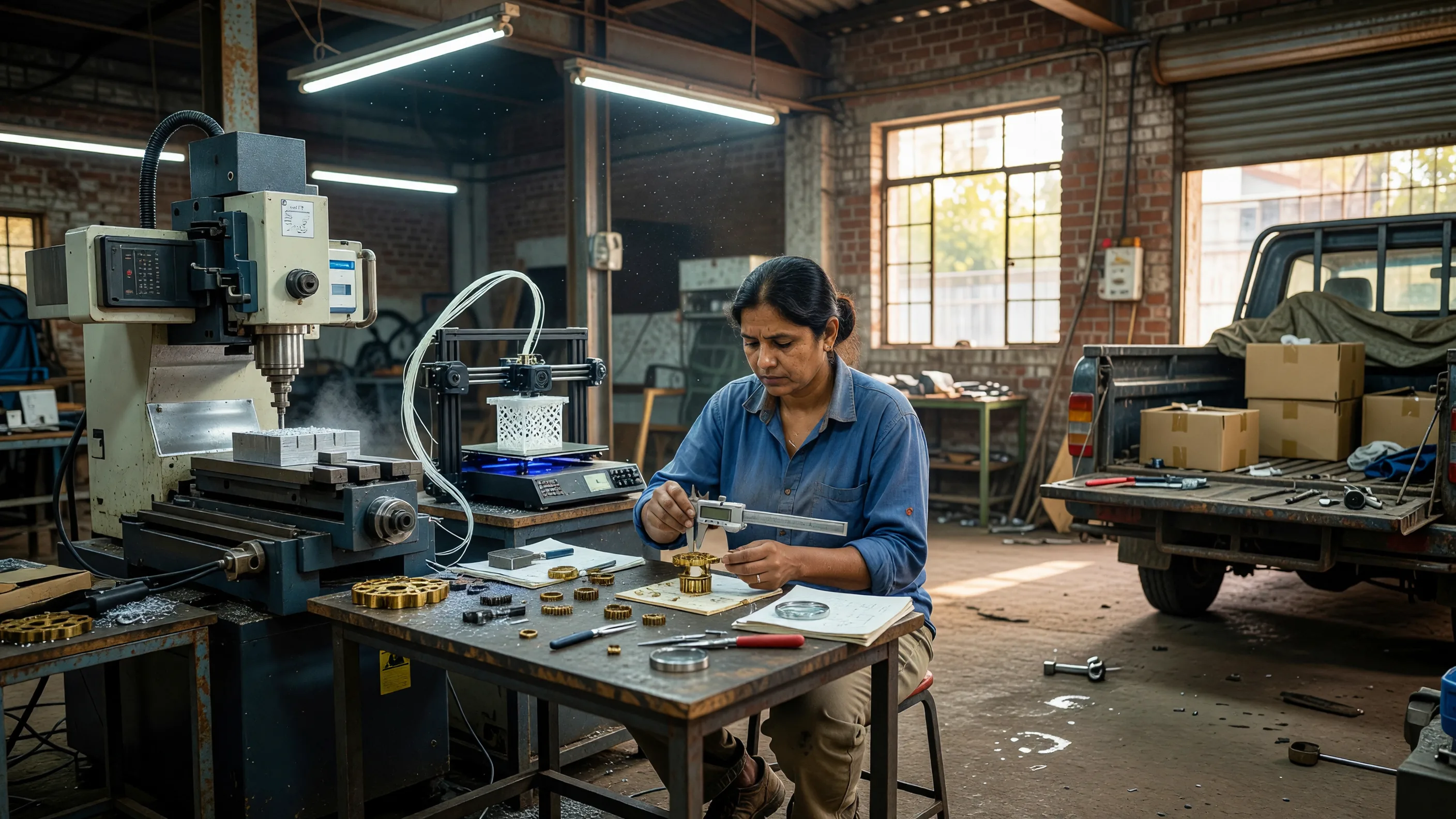
Micro-manufacturing is becoming one of the most practical entry points for Indian entrepreneurs who want to build a real product business without starting with a huge factory, a large team, or heavy debt. The idea is simple: choose a focused product category, use compact machinery or semi-manual production, keep the initial batch size small, and sell through a mix of local distributors, online channels, B2B buyers, and direct customer relationships. For readers of Business & Income, this model is attractive because it allows entrepreneurs to learn, test, and scale in controlled stages.
India is seeing growing demand for niche products in packaging, food processing, home improvement, stationery, personal care, gifting, and light engineering. Many small buyers no longer want to depend only on large suppliers because they need faster customization, smaller minimum order quantities, and regional service support. This gap creates space for founders who can manufacture reliably and communicate professionally. A micro-unit may not produce at a national scale on day one, but it can win by being responsive, consistent, and close to the customer.
Why Micro-Manufacturing Makes Sense Now
The biggest advantage of micro-manufacturing is lower risk. Instead of investing in a large plant before understanding demand, an entrepreneur can begin with one or two machines, rented space, and a narrow product line. For example, a founder can start with paper bags for local boutiques, spice grinding and packing for regional retailers, customized acrylic signage for shops, or simple metal components for repair workshops. Each business has different compliance and capital requirements, but the common principle is the same: start where demand is visible and repeatable.
Another reason this model is becoming popular is the rise of digital discovery. A small manufacturer can now use Google Business Profile, WhatsApp catalogues, Instagram reels, B2B marketplaces, and basic SEO pages to reach customers beyond the immediate lane or industrial area. A buyer searching for a local packaging supplier, customized corporate gifting, or small-batch private-label production is often ready to speak with vendors quickly. Strong presentation can make a small unit look more reliable than a bigger competitor with poor communication.
Product Categories Worth Exploring
Not every product is suitable for a first-time manufacturer. The best options usually have steady demand, manageable raw materials, simple quality checks, and clear buyer segments. Here are some categories that deserve attention:
- Eco-friendly packaging: paper bags, kraft boxes, food-safe labels, and corrugated inserts for local D2C brands.
- Food support products: spice blends, millet flour mixes, bakery premixes, and regional snack packing, provided compliance is handled carefully.
- Retail display items: acrylic stands, menu boards, shelf tags, signboards, and event branding material.
- Home utility products: storage organizers, cleaning accessories, simple kitchen tools, and plastic-free alternatives.
- Light industrial supply: rubber parts, brackets, fasteners, machine labels, safety signage, and maintenance consumables.
Data Insights
Indicative opportunity score by product type
Scores are indicative and based on repeat demand, ease of validation, buyer accessibility, and scalability for small manufacturers.
Packaging often offers the quickest B2B repeat demand because retailers, food brands, and D2C sellers need regular supplies in customized quantities.
How to Validate Before Buying Machinery
The most expensive mistake is buying equipment before confirming buyers. A smarter approach is to speak with 25 to 50 potential customers first. Visit local retailers, restaurants, salons, schools, clinics, small factories, and distributors. Ask what they buy repeatedly, what problems they face with existing suppliers, and what minimum quality they expect. These conversations reveal whether the opportunity is real or only exciting on paper.
Founders should also create sample pricing sheets before investing. Include raw material cost, labour, electricity, rent, packaging, transport, wastage, payment delays, and marketing expenses. A product that looks profitable at the raw material level may become weak after all costs are added. For a stable business, the gross margin should be strong enough to absorb seasonal demand, rejected pieces, and credit cycles.
Marketing a Small Unit Like a Serious Brand
Many micro-manufacturers fail not because their product is poor, but because buyers do not trust them. A simple website, professional product photos, a catalogue PDF, a Google Maps listing, and customer testimonials can change that perception. BusinessTalks.in often highlights how small businesses can win leads by combining local trust with digital credibility. A founder should publish product pages, explain use cases, mention minimum order quantities, and display delivery areas clearly.
Internal content also matters. Articles in Marketing Insights on local SEO, WhatsApp follow-ups, and lead conversion can help business owners turn enquiries into orders. Even a basic CRM sheet can track leads, quotation status, sample dispatches, and follow-up dates. In B2B manufacturing, consistent follow-up often wins more orders than aggressive discounting.
Operational Discipline for Long-Term Growth
Once orders begin, quality control becomes the real differentiator. Maintain a simple checklist for size, finish, weight, colour, packaging, and dispatch condition. Record batch numbers wherever possible. Keep multiple suppliers for raw materials so one delay does not stop production. Train workers on repeatable steps instead of depending only on memory. Small systems create big confidence for buyers.
Payment terms must also be handled firmly. New founders often accept long credit periods to win orders, but this can damage cash flow. Start with advance payment, partial payment, or shorter cycles until trust is built. For repeat B2B buyers, document the terms clearly. A profitable order is not useful if money arrives too late to buy the next batch of material.
Conclusion
Micro-manufacturing is not a shortcut to overnight success, but it is a practical path for entrepreneurs who want to build something tangible. The winners in 2026 will be those who choose focused products, validate demand before investing, market professionally, and maintain operational discipline. With the right niche and a customer-first mindset, a small unit can become a dependable supplier, then a regional brand, and eventually a scalable manufacturing business.