
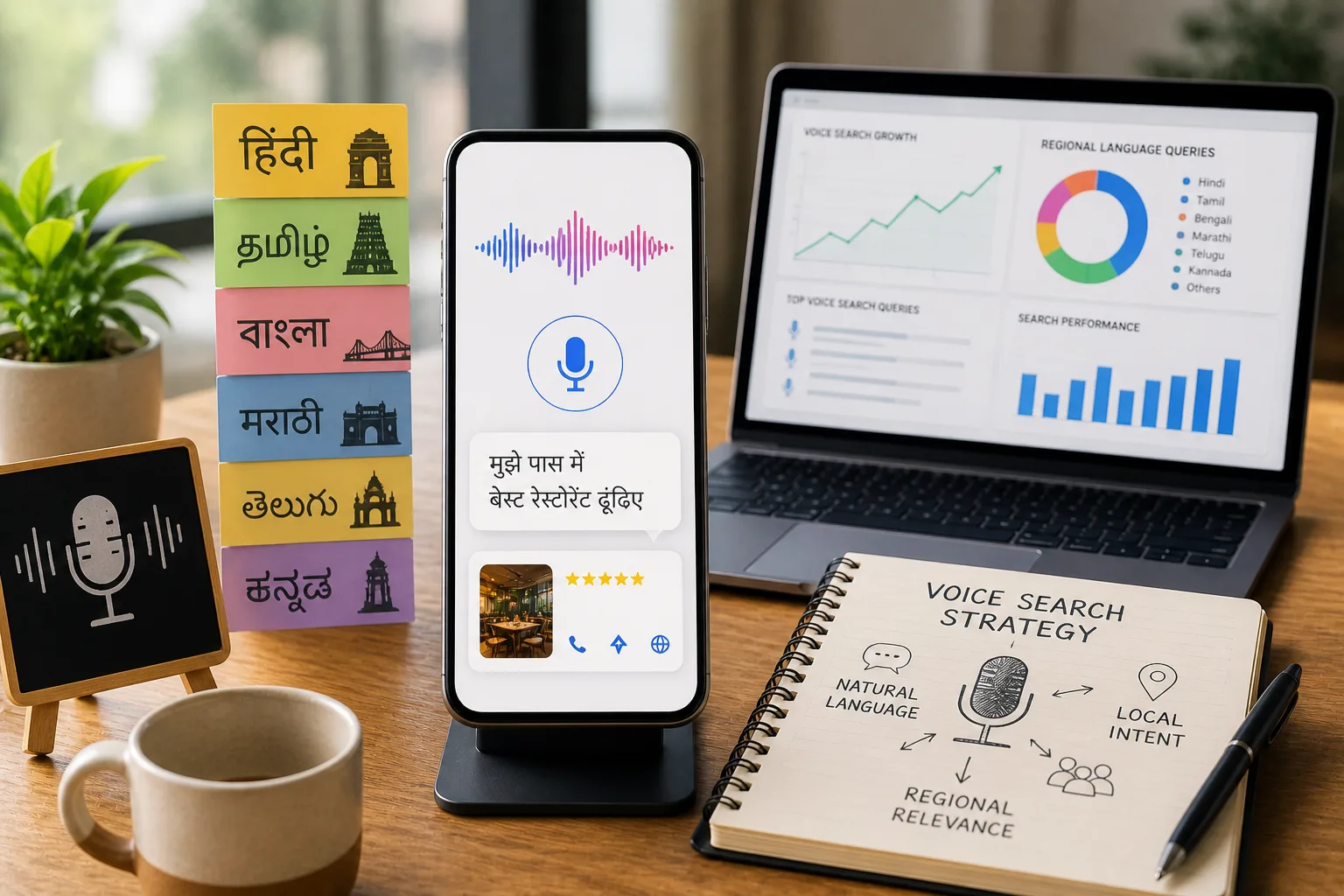
The next billion internet users in India are not typing their queries into search engines; they are speaking them. Voice search adoption is exploding across the subcontinent, driven by affordable smartphones, improved internet penetration, and the sheer convenience of speaking in one's native tongue. For businesses, optimizing for regional voice search is no longer optional—it is critical for digital survival.
The Shift to Conversational Search
Voice queries differ fundamentally from typed queries. While a user might type "best shoes Mumbai," they will say, "Where can I buy good running shoes near me?" Voice searches are longer, conversational, and highly intent-driven. When these queries are made in Hindi, Tamil, Bengali, or Marathi, the SEO game changes entirely.
Key Strategies for Regional Voice SEO
- Focus on Long-Tail Conversational Keywords: Identify the natural language phrases your target audience uses in their regional dialect. Tools like Google Keyword Planner now offer better insights into regional query variations.
- Create FAQ Pages in Regional Languages: Voice assistants pull answers directly from structured, concise text. Having a dedicated FAQ page written in Hindi or Tamil that directly answers common questions (e.g., "How much does X cost?", "What are the timings for Y?") dramatically increases your chances of capturing the voice search snippet.
- Optimize for "Near Me" Intent: A massive percentage of mobile voice searches have local intent. Ensure your local business listings are accurate and comprehensively filled out in both English and your regional language.
- Implement Multilingual Structured Data: Use schema markup to help search engines understand the context and language of your content. This makes it easier for algorithms to serve your content for specific regional queries.
Content Naturalization
Avoid robotic translations. Direct translation tools often strip away cultural nuances and colloquialisms. Content must be localized—written or adapted by native speakers who understand regional slang and phrasing. If you want to dive deeper into SEO tactics, visit our Marketing Insights section.
Conclusion
Voice search optimization in regional languages presents a massive, relatively untapped opportunity for Indian businesses. By adopting a conversational, multilingual SEO strategy, brands can capture early market share, build trust with diverse demographics, and stay ahead of the digital curve in 2026.