
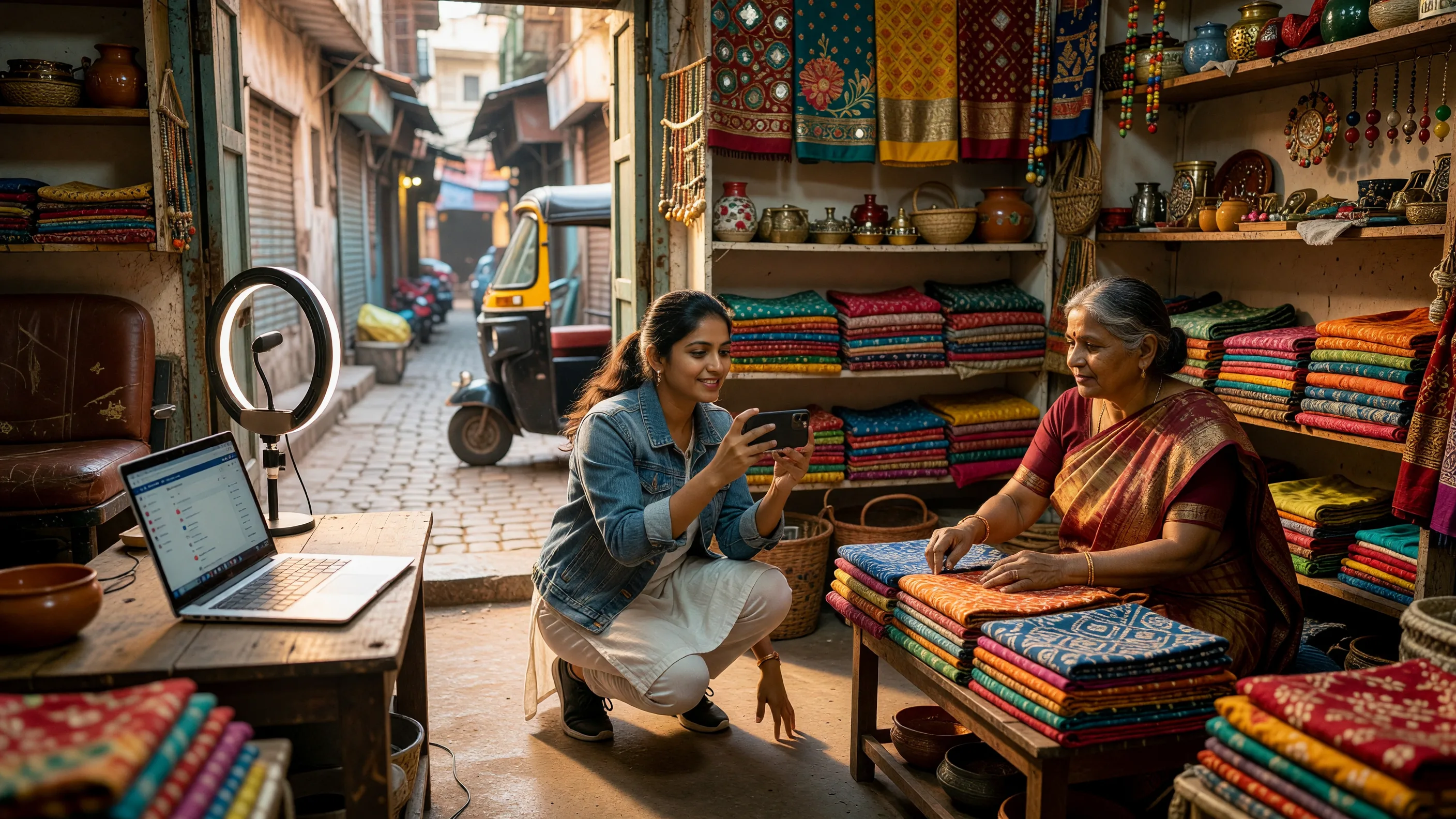
Here's a scenario that plays out constantly in Indian business communities: a small business owner spends ₹50,000 on a celebrity endorsement, gets a spike in followers for two days, and then watches engagement flatline. Meanwhile, their competitor pays a local food blogger ₹3,000 to review their product and the comment section fills up with genuine "where can I buy this?" questions.
Welcome to the world of micro-influencer marketing — and why it might be the smartest, highest-ROI marketing move your Indian small business makes in 2026.
What Is Micro-Influencer Marketing?
Micro-influencers are content creators with follower counts typically between 10,000 and 100,000. They're not celebrities. They're not mega-stars with brand deals worth crores. They're the local foodie in your city whose restaurant recommendations your target audience actually trusts, the fitness enthusiast whose supplement reviews feel genuinely honest, or the Saree stylist whose outfit posts drive real purchase decisions.
The magic of micro-influencers lies in their engagement rates. While a celebrity with 5 million followers might get 0.5% engagement on a sponsored post, a micro-influencer with 30,000 followers in a specific niche regularly sees 4–8% engagement. That's not just wider reach — that's real attention from a genuinely interested, highly relevant audience.
Why Micro-Influencers Work Especially Well in India
India is a country of communities — regional, linguistic, cultural, and interest-based. A micro-influencer who speaks Tamil and reviews authentic Chettinad recipes has an audience that trusts her implicitly and follows her recommendations seriously. That trust is extraordinarily valuable for local food brands, regional clothing labels, and city-specific service businesses.
Additionally, India has an enormous and still-growing creator economy. With millions of active content creators across Instagram, YouTube Shorts, and Moj, there's a micro-influencer for virtually every product niche — from organic skincare in Bengaluru to handloom sarees in Varanasi to leather goods in Kolkata.
Market Comparison
| Influencer Type | Followers | Avg. Engagement | Cost Per Post (approx.) | Best For |
|---|---|---|---|---|
| Nano Influencer | 1K – 10K | 6% – 10% | Free – ₹2,000 | Hyperlocal, word-of-mouth |
| Micro Influencer | 10K – 100K | 3% – 7% | ₹2,000 – ₹25,000 | Niche targeting, SMB growth |
| Macro Influencer | 100K – 1M | 1% – 3% | ₹25,000 – ₹2L | Brand awareness, launches |
| Celebrity / Mega | 1M+ | 0.3% – 1% | ₹2L – ₹1Cr+ | Mass reach, national brands |
How to Find the Right Micro-Influencers for Your Business
Finding the right creator doesn't require an expensive agency or a big budget. Here's a practical approach that works for Indian small business owners:
- Search Instagram hashtags: Look up location-specific and niche hashtags like #ChennaiFood, #BengaluruFitness, or #PuneCafe to discover creators already producing content your target audience follows.
- Check engagement quality: Don't just count likes. Read the comments. Are they genuine conversations or generic emoji responses? Real engagement looks conversational and specific.
- Use free discovery tools: Platforms like HypeAuditor (free tier), Modash, and Instagram's own Creator Marketplace let you filter by follower count, location, niche, and audience demographics.
- Start with product barter: For newer businesses, offering free products in exchange for honest reviews is a legitimate and cost-effective way to begin building influencer relationships.
Structuring Your First Campaign
Before you DM a creator, get clear on your specific goal. Are you trying to build brand awareness in a new city, drive traffic to your website, or generate direct product sales? Your goal shapes everything — the type of content you request, the call-to-action you include, and how you measure success afterward.
A solid first campaign for an Indian SME might look like this: identify 5–10 micro-influencers in your category, share a clear but flexible brief (not a word-for-word script — let them speak in their own voice), provide a trackable discount code or UTM link, and measure results over 2–4 weeks before deciding what to scale.
Common Mistakes to Avoid
- Choosing influencers based on follower count alone without checking engagement or audience fit
- Providing overly scripted content briefs that strip away the creator's authenticity
- Not tracking results with UTM links or unique discount codes — you can't optimise what you don't measure
- Working with influencers whose audience doesn't match your target market geographically or demographically
Conclusion
Micro-influencer marketing isn't a passing trend — it's a durable strategy that plays to the natural strengths of trust, niche relevance, and genuine community. For Indian small businesses working with lean marketing budgets, it offers extraordinary return on investment when approached with the right research and structure.
For more actionable digital marketing strategies built for Indian businesses, visit our Marketing Insights section. And if you're also considering paid digital channels, our detailed comparison of Google Ads vs Meta Ads is worth reading alongside this guide.