
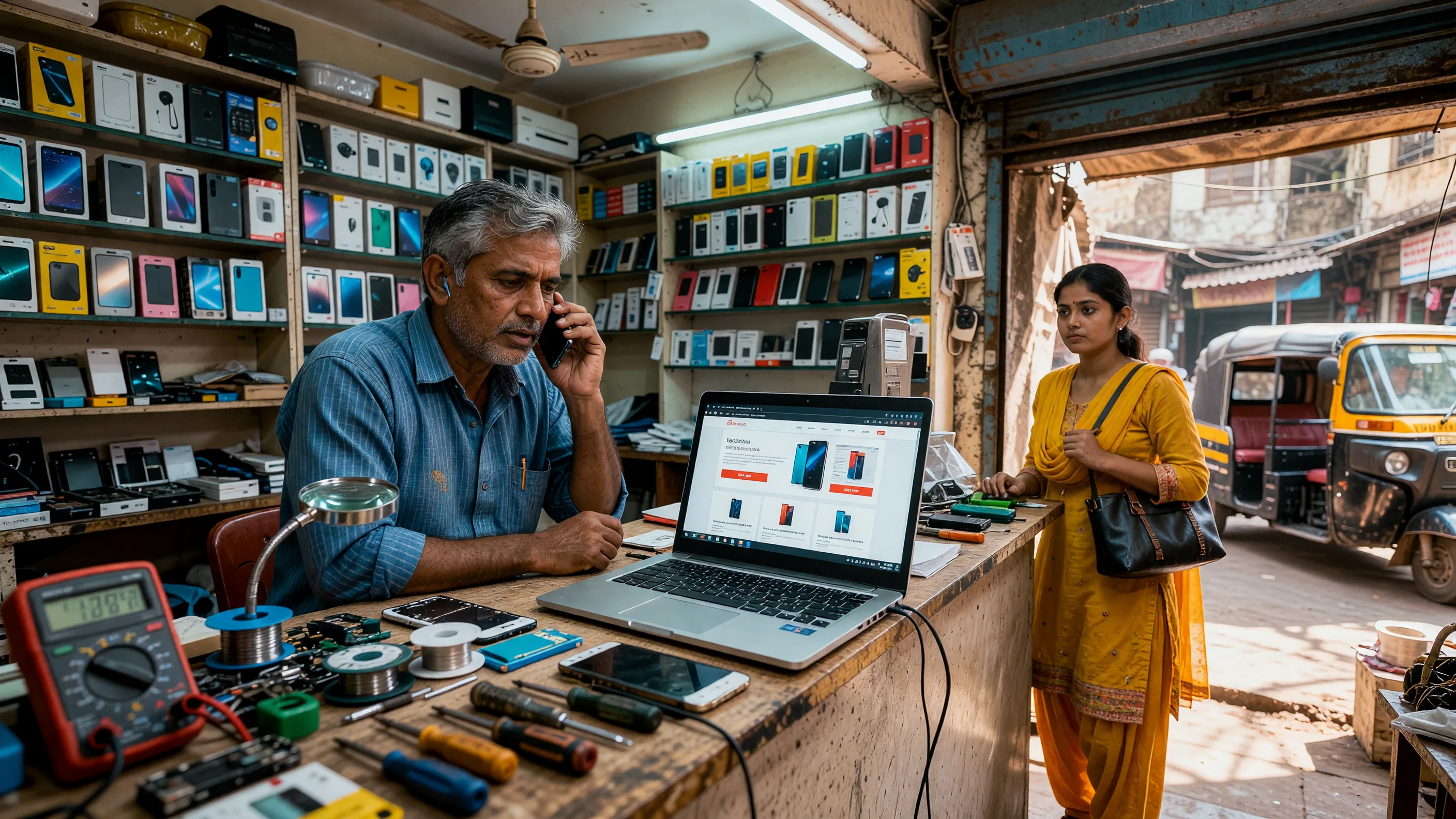
Many Indian SMEs spend money on Google Ads, Meta Ads, influencer promotions, SEO campaigns, and WhatsApp marketing, but send visitors to a weak landing page. The result is predictable: clicks come, ad budget gets spent, but enquiries remain low. A landing page is not just another web page; it is a focused sales conversation. It must quickly tell visitors what you offer, why they should trust you, and what action they should take next.
That is why landing page optimization is an important part of Marketing Insights for small and medium businesses. A well-optimized landing page can improve lead quality, reduce wasted ad spend, and convert more visitors into calls, WhatsApp enquiries, bookings, consultations, and sales.
The good news is that most landing page improvements do not require a complete redesign. Clear headlines, faster loading speed, better mobile layout, stronger trust signals, visible call buttons, and simpler forms can make a noticeable difference. For Indian businesses, where many leads come through phone calls and WhatsApp, the page should make contact simple, fast, and trustworthy.
Start With One Clear Promise
A common mistake is trying to say too much in the first section of the page. The first screen should communicate one clear promise. Visitors should immediately understand what the business offers and why it is relevant to them.
For example, a pest control company can say, "Book safe termite treatment in Pune with inspection support." A salon academy can say, "Learn professional makeup skills with weekend batches in Jaipur." A B2B software company can say, "Manage retail billing and inventory from one simple dashboard."
Specific promises are stronger than generic phrases like "best solutions for your needs" or "we provide quality services." The headline should also match the ad or campaign that brought the visitor. If the ad promises a free consultation, the landing page should mention it clearly. If the campaign targets restaurant owners, the page should not speak broadly to every type of business.
This connection between the ad message and the landing page message is called message match. It reduces confusion, builds trust, and increases the chance of conversion.
Design for Mobile First
Most SME campaign traffic in India comes from mobile users. A landing page that looks attractive on desktop but feels crowded on a phone can lose valuable leads. The mobile version should be simple, readable, and easy to use.
Buttons should be large enough to tap. Text should be short and clear. Forms should not ask for unnecessary details. Call and WhatsApp buttons should appear near important decision points. A visitor should not have to scroll endlessly to find the phone number or contact option.
Speed is equally important. Heavy images, unnecessary scripts, sliders, pop-ups, and poor hosting can slow down the page. Even a few seconds of delay can reduce conversions, especially when users are comparing multiple vendors. A clean, fast-loading landing page usually performs better than a fancy but slow page.
Conversion Impact Snapshot
The graph below shows the indicative impact of common landing page improvements for SME campaigns. These are not fixed percentages; actual results depend on industry, traffic quality, offer, pricing, and follow-up process.
Indicative Landing Page Optimization Impact
```Note: This graph represents indicative impact scores, not guaranteed conversion percentages. Businesses should test changes using their own campaign data.
```Use Trust Signals That Feel Real
Trust signals are not just decorative badges. They answer the visitor's silent question: "Can I believe this business?" Useful trust signals include real customer reviews, business photos, project images, certifications, service guarantees, founder details, press mentions, before-and-after results, and clear address information.
A local business should show that it actually exists and serves real customers. For example, a service company can show team photos, office location, Google reviews, completed project images, and customer feedback from the same city. A training institute can show student work, batch photos, placement support, certificates, and trainer profiles.
Testimonials should be specific. A review like "Good service" is weak. A stronger testimonial would say, "The team arrived on time, completed our cafe pest control treatment in two hours, and shared safety instructions clearly." Specific details such as customer type, city, result, and experience make testimonials more believable.
Keep Forms Short and Intentional
Every extra form field creates friction. Ask only for the information needed to start the conversation. For many SMEs, name, phone number, city, and requirement are enough. If the business needs more details, they can be collected during the follow-up call or WhatsApp conversation.
Long forms may look professional, but they often reduce lead volume. A customer who is ready to enquire may leave the page if the form asks for too much information too early.
WhatsApp lead capture works well in India, but it should not be the only option. Some customers prefer calling, while others prefer filling out a form. Offer two or three clear contact paths instead of too many options. Too many choices can create confusion.
The call to action should also be consistent. Use action-focused phrases such as:
- Book a free consultation
- Request a quote
- Schedule a visit
- Download the catalogue
- Talk to an expert
Explain Pricing Without Creating Fear
Many SMEs avoid showing pricing because every customer requirement is different. That is understandable, but the landing page should still reduce uncertainty. Visitors want to know whether the service is affordable, premium, customized, or suitable for their budget.
You can mention starting prices, package ranges, sample project costs, or the factors that affect pricing. For example, a digital marketing agency can explain that local SEO pricing depends on city competition, number of service pages, content requirements, and monthly reporting. A furniture maker can explain that size, material, finish, design complexity, and delivery location affect cost.
Transparent pricing guidance filters low-quality leads and builds confidence with serious buyers. It also reduces repetitive calls from people who are far outside the target budget. A visitor who understands the approximate investment is more likely to have a productive conversation.
Measure What Actually Matters
Do not judge a landing page only by traffic. Traffic shows how many people arrived, but conversion tracking shows how many people took action. SMEs should track form submissions, calls, WhatsApp clicks, cost per lead, lead quality, follow-up success, and final sales.
A page with fewer but better-quality leads can perform better than a page that generates many weak enquiries. For Indian SMEs, it is important to connect campaign data with actual sales conversations. Even a simple spreadsheet can help track which campaigns, landing pages, and offers bring the best customers.
A/B testing can also be useful, but it should be practical. Test one major change at a time, such as the headline, hero image, call button placement, form length, offer, testimonial section, or pricing block. Avoid changing everything together because you will not know which change caused the improvement.
Common Landing Page Mistakes SMEs Should Avoid
- Too much text in the first section: Visitors should understand the offer quickly.
- No visible contact button: Call and WhatsApp options should be easy to find.
- Slow loading speed: Heavy pages can waste paid traffic.
- Generic headlines: Specific promises convert better than vague claims.
- No proof: Reviews, photos, case results, and certifications build trust.
- Long forms: Ask only what is necessary for the first conversation.
- No pricing guidance: Give at least a range or explain pricing factors.
Conclusion
Landing page optimization is one of the fastest ways for Indian SMEs to improve marketing ROI. Before increasing ad budgets, businesses should first improve the page that receives the traffic. A strong landing page makes the promise clear, loads quickly, works well on mobile, builds trust, simplifies contact, explains pricing, and measures lead quality.
A good landing page does not shout or overload the visitor. It guides them calmly toward the next step. That difference can turn wasted clicks into calls, consultations, bookings, enquiries, and real sales.