
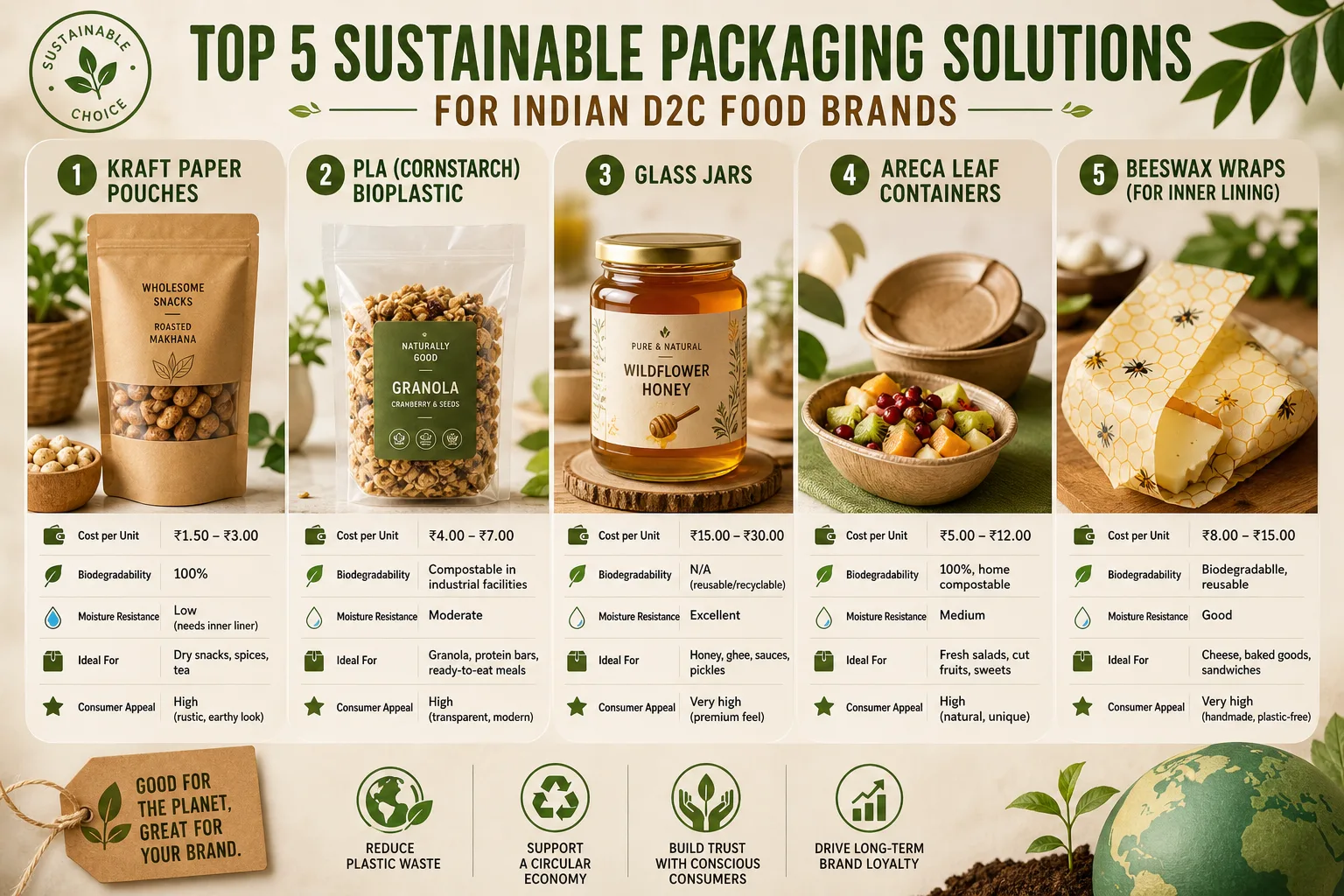
Sustainable packaging is no longer a nice-to-have for Indian D2C food brands—it's a consumer expectation. From glass bottles and compostable pouches to plant-based cling wrap, founders are rethinking how their products reach customers. The right packaging not only reduces environmental impact but also enhances brand perception and even reduces long-term costs. In this guide, we compare five practical and accessible sustainable packaging materials suitable for Indian climate and logistics.
Why Packaging Matters More Than Ever
India generates over 3.4 million tonnes of plastic waste annually, a significant chunk from food packaging. Gen Z and millennial consumers actively seek brands that ditch single-use plastic. Additionally, government regulations are tightening: many states have banned certain plastics, and there's growing emphasis on Extended Producer Responsibility (EPR). Switching to eco-friendly packaging now positions your brand as a responsible market leader—and often unlocks premium pricing.
Market Comparison: Sustainable Packaging Options
| Material | Cost per Unit | Biodegradability | Moisture Resistance | Ideal For | Consumer Appeal |
|---|---|---|---|---|---|
| Kraft Paper Pouches | ₹1.50 – ₹3.00 | 100% | Low (needs inner liner) | Dry snacks, spices, tea | High (rustic, earthy look) |
| PLA (Cornstarch) Bioplastic | ₹4.00 – ₹7.00 | Compostable in industrial facilities | Moderate | Granola, protein bars, ready-to-eat meals | High (transparent, modern) |
| Glass Jars | ₹15.00 – ₹30.00 | N/A (reusable/recyclable) | Excellent | Honey, ghee, sauces, pickles | Very high (premium feel) |
| Areca Leaf Containers | ₹5.00 – ₹12.00 | 100%, home compostable | Medium | Fresh salads, cut fruits, sweets | High (natural, unique) |
| Beeswax Wraps (for inner lining) | ₹8.00 – ₹15.00 | Biodegradable, reusable | Good | Cheese, baked goods, sandwiches | Very high (handmade, plastic-free) |
Note that prices are indicative for small to medium batch orders and will decrease as you scale. Each option has its trade-offs, so choose based on your product's shelf life, shipping conditions, and branding.
Deep Dive into Each Material
Kraft Paper Pouches: These are the go-to for tea, spice, and dry fruit brands. They are inexpensive, printable with soy inks, and compost at home. To handle moisture, brands often use a thin plant-based PLA liner inside. Their rustic look aligns perfectly with the “back-to-roots” positioning of many Indian D2C startups.
PLA Bioplastic: Made from fermented cornstarch, PLA is transparent and feels like conventional plastic, but it requires industrial composting facilities. While India is still building such infrastructure, many metropolitan cities now have composting partners that can process PLA. Ideal for brands targeting eco-conscious urban consumers.
Glass Jars: The most premium option. Glass is infinitely recyclable and keeps products like ghee or pickles fresh without any leaching. They are heavier and more expensive to ship, but many brands offset the cost by running return-and-refill programs. Customers often reuse the jars, creating subtle ongoing brand exposure.
Areca Leaf Containers: Crafted from fallen areca palm leaves, these containers are sturdy, microwave-safe, and decompose within 60 days. They are brilliant for fresh food delivery and festival gift packs. The natural texture instantly communicates eco-friendliness.
Beeswax Wraps: Usually used as an inner wrap for bakery items. They are washable and can be reused for months. When finally discarded, they biodegrade completely. This option adds an artisanal, handcrafted charm that customers love to share on social media.
How to Choose the Right Packaging
Consider three factors: product requirement, target customer, and logistics. A spice brand shipping pan-India will prioritise lightweight, moisture-resistant pouches, while a hyperlocal bakery might choose areca containers for same-day delivery. Also, factor in your brand story—if you champion plastic-free living, using glass and beeswax creates a coherent narrative. Visit our Products & Reviews section for more supplier comparisons and honest reviews.
Conclusion
Sustainable packaging is an investment, not a cost. It differentiates your brand in a crowded market, builds customer loyalty, and future-proofs your business against tightening regulations. Start with small pilot batches, get customer feedback, and scale what works. The earth—and your customers—will thank you.