
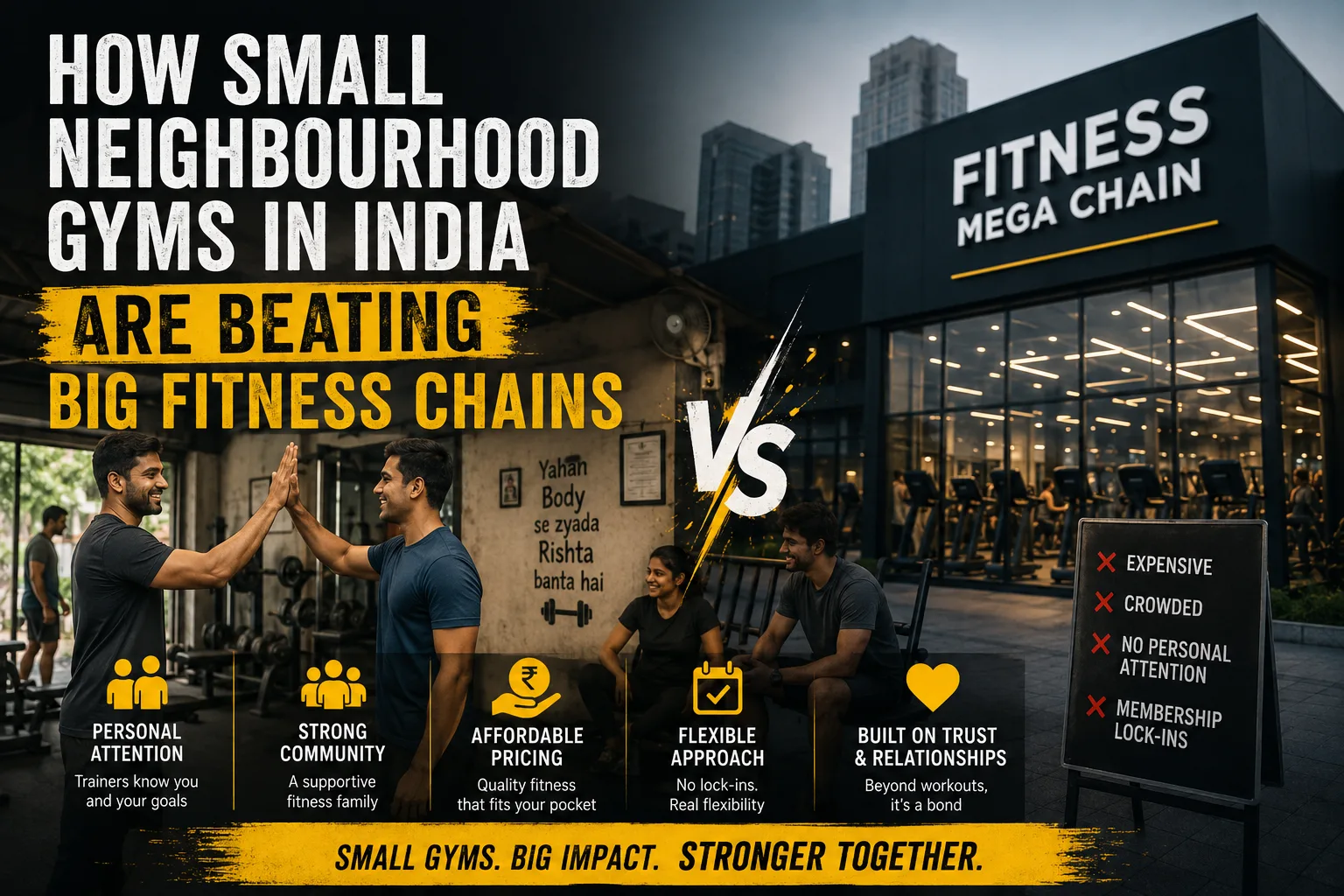
India's fitness industry is an interesting paradox. Premium gym chains have invested crores in state-of-the-art equipment, celebrity trainers, and sleek interiors. And yet, a growing number of those chains are quietly struggling with membership retention while small neighbourhood gyms — sometimes running out of barely renovated spaces — are packed with loyal regulars who wouldn't dream of switching.
What's actually happening here? And what can fitness entrepreneurs — and really, any local business owner — learn from this pattern?
The Big Chain Problem Nobody Talks About Openly
Large fitness chains have a structural business model challenge built into their DNA: their revenue projections depend on members paying but not actually showing up. The math works on paper. If every member who signed up came to the gym daily, most facilities would be dangerously overcrowded and the experience would suffer. So these businesses are quietly, sometimes unconsciously, optimised for signups — not for habit formation or member outcomes.
Neighbourhood gyms don't have that luxury. With a membership base of 100–300 people rather than 1,000+, every dropout is immediately felt in the month's cash flow. That financial reality forces small gym owners to genuinely care about their members' results — and that's precisely what members want from a fitness relationship.
What Small Gyms Consistently Do Better
The advantages of a good neighbourhood gym in India are real, tangible, and often underestimated by people who have only experienced large chain facilities:
- The trainer actually knows your name. In a compact neighbourhood gym, the owner often doubles as the head trainer. They remember your injury history, your personal records, and when you've been missing sessions — and they'll actually send you a WhatsApp message asking if everything is okay.
- Community here is genuine. Members who live within walking distance of each other and train together four times a week develop real friendships. Those friendships become the primary reason people keep showing up — not the equipment quality or the playlist.
- Flexibility is a built-in feature. Neighbourhood gyms are far more likely to accommodate custom payment plans, short-term memberships, family packages, pause requests during exam season, or informal "come back when you can" arrangements. Big chains have rigid systems that don't bend.
- Proximity is the most underrated retention driver. A gym within 1–2 kilometres of home or work removes the most common excuse not to go. Research on exercise adherence consistently shows that commute friction is among the strongest predictors of dropout rates.
Data Insights
Estimated Annual Member Retention Rate by Gym Type — Indian Urban Market
Gyms
Chains
Chains
Fitness
* Illustrative figures based on observed patterns in the Indian urban fitness market. Actual results vary by location and management quality.
How Digital Tools Are Closing the Gap
Five years ago, a neighbourhood gym had no answer to a large chain's branded app, loyalty program, or digital infrastructure. That gap has mostly closed. Smart small gym owners are now using digital tools that are free or nearly free and getting real results from them:
- WhatsApp Business: Used for scheduling sessions, sending renewal reminders two weeks before expiry, sharing weekly workout tips, and checking in on members who've gone quiet. The personal touch of a WhatsApp message from the gym owner lands very differently than an automated app notification.
- Google Business Profile: A well-maintained profile with recent photos, genuine reviews, and consistent updates puts a neighbourhood gym at the top of "gym near me" searches in its locality. Many gym owners have built their entire discovery funnel through this one free tool.
- Instagram Reels: Transformation stories, member milestones, and quick workout demonstrations perform extremely well organically for local fitness businesses. One good transformation post can generate more new inquiries than a month of paid flyers.
- Simple billing software: Tools like Vyapar or GymMaster handle memberships, renewals, and payment tracking without requiring any technical background. Automating the admin side frees the owner to spend time on what actually retains members — the personal relationship.
The Pricing Advantage That Often Goes Unmentioned
A premium chain membership in a Tier 1 Indian city runs ₹2,500–5,000 per month, sometimes more for specialised classes. A neighbourhood gym offering comparable equipment and significantly more personalised attention typically prices between ₹800–1,800 per month. That gap matters enormously to a large portion of India's working population.
More interestingly, neighbourhood gyms that have invested in creating a genuine community feel discover they can charge more than they initially thought — because members aren't paying only for equipment access. They're paying for belonging. That's a premium many people are willing and even happy to pay once they experience it.
Practical Tips for Neighbourhood Gym Owners
- Create a "transformation wall" with before-and-after photos from willing members. It is the single most powerful piece of social proof in this industry and costs nothing to maintain.
- Send a personalised message — not a broadcast — when a member hits a milestone like completing three months, losing 5 kg, or achieving a personal best.
- Build a structured referral programme: "Bring a friend and train free for one month." Word of mouth is the dominant acquisition channel for local fitness businesses, and making it rewarding accelerates it significantly.
- Offer trial weeks rather than trial days. Most people need more than one session to feel genuinely comfortable in a new gym environment. A week-long trial converts far better than a single free class.
Final Thoughts
India's fitness market is large and still growing — and it is not a winner-take-all category. There is room for premium chains and neighbourhood gyms to coexist, but the small gym that builds real community, invests in its members' actual outcomes, and uses available digital tools smartly doesn't just survive. It builds something the big chains genuinely cannot replicate: a place where people feel known.
Read more about local business growth strategies in our Local Businesses section. For the marketing side of things, our Marketing Insights guides cover digital tactics that work specifically for small fitness and wellness businesses operating on tight budgets.