
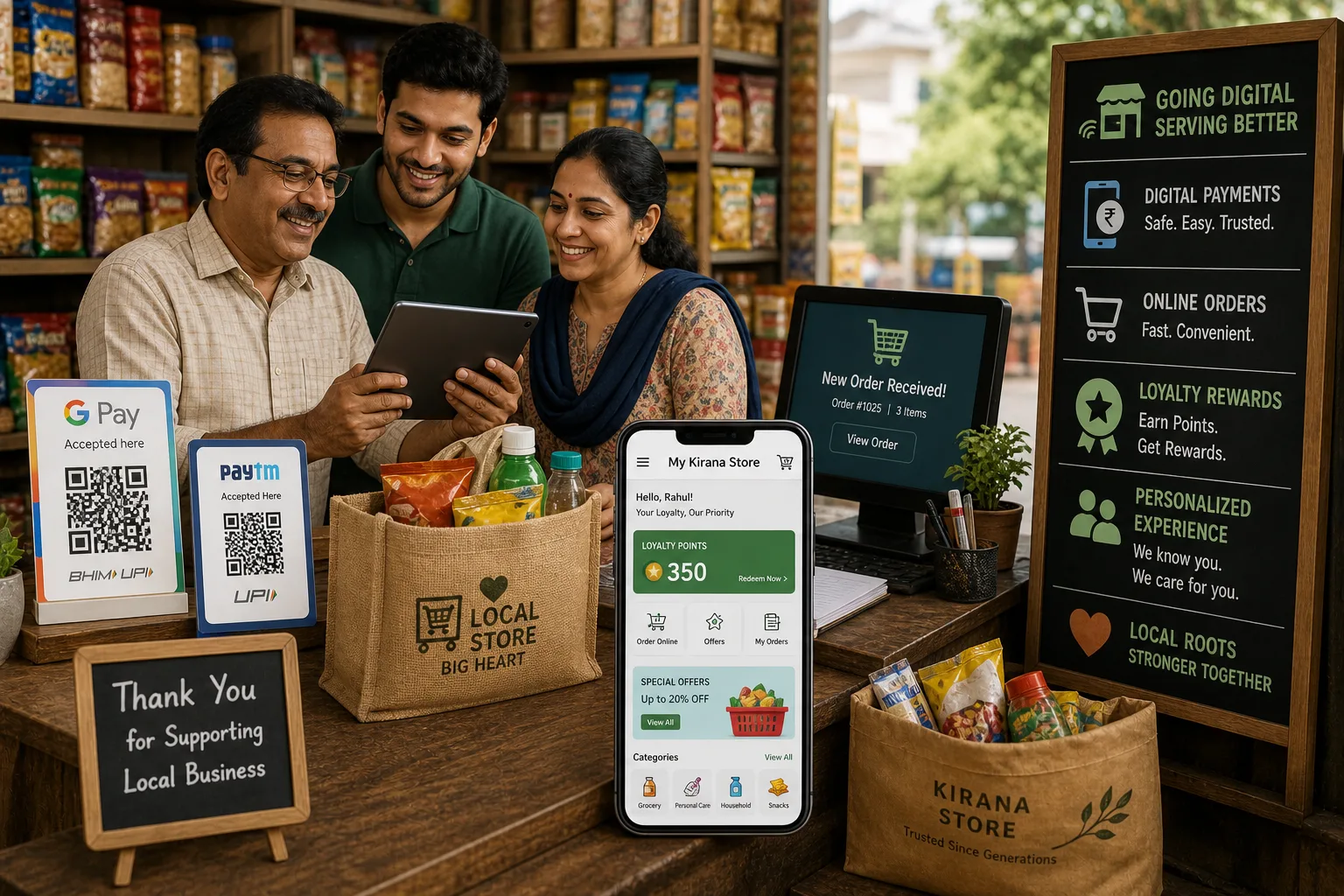
India has roughly 12 million kirana stores — small neighbourhood grocery shops that have been the backbone of everyday retail for generations. And for the past few years, everyone has been predicting their decline. Quick commerce platforms like Blinkit, Zepto, and Swiggy Instamart promise groceries in 10 minutes. E-commerce giants offer competitive prices and doorstep delivery.
Yet kiranas are surviving — and many are quietly thriving. The ones doing best aren't fighting digital; they're embracing it selectively. Here's what that looks like on the ground.
The Kirana's Unfair Advantage
Before talking about digital tools, it's worth naming what kiranas have that no app can replicate: deep community trust. The owner knows which family buys which brand of atta, who has a diabetic family member, and which neighbour needs credit at the end of the month. That relationship has been built over years, sometimes across generations.
Digital tools don't replace this — they amplify it. The smartest kirana owners are using technology to do more of what they already do well: personalized service, fast delivery, and genuine care for their customers.
WhatsApp: The Digital Counter
The single most impactful tool for kirana digitisation isn't an app or a POS system. It's WhatsApp. Nearly every kirana owner already has it — and so do their customers.
Here's how forward-thinking kiranas are using it:
- Daily order collection — Customers send their grocery list on WhatsApp and the owner delivers or keeps it ready for pickup. No app download required from the customer.
- WhatsApp Status as a product catalogue — Owners post daily offers, new arrivals, and out-of-stock notifications on their Status. Regular customers check it the way they'd browse an app.
- Broadcast lists for promotions — Festival offers, weekly specials, and new stock alerts go out to curated lists of loyal customers in seconds.
- Voice message orders — For elderly customers who aren't comfortable typing, voice messages work beautifully. The owner listens, packs, and delivers.
The WhatsApp Business app (free) adds a product catalogue feature, quick replies, and away messages — small upgrades that make the experience feel more professional without losing the personal touch.
Getting on Google Maps: The Underrated Move
A surprising number of kirana owners haven't claimed their Google Business Profile. This is a missed opportunity. When someone new to the neighbourhood searches "kirana near me" or "grocery store open now", a verified profile with photos, hours, and customer reviews puts you directly in front of them.
Setting up a Google Business Profile is free and takes about 30 minutes. The impact — showing up in local search results and on Google Maps — can bring in a steady stream of new customers who would otherwise never have found you.
Digital Payments and UPI
Demonetisation pushed many kiranas to accept UPI, and the habit has stuck. Owners who accept Google Pay, PhonePe, and Paytm report fewer problems with change, faster checkout, and a cleaner record of daily transactions.
Some have gone further — using their UPI transaction history as informal bookkeeping, cross-referencing digital payments with their manual khata to catch discrepancies. It's not accounting software, but it's a meaningful step toward financial clarity.
Khata Apps: Replacing the Paper Ledger
Speaking of khata — credit to regular customers has always been part of the kirana model. Managing it on paper gets messy. Apps like OkCredit and Khatabook have digitised this beautifully. Owners record credit entries on their phone, and the app automatically sends payment reminders to customers via SMS or WhatsApp. Recovery rates improve, and the awkward in-person reminder conversation is replaced by a friendly automated message.
Both apps are free (with paid premium tiers) and require no accounting knowledge to use.
Digital Tool Adoption Among Kiranas
*Indicative adoption rates among urban kirana stores in metro and Tier 1 cities
Loyalty Without a Loyalty Program
Big retail chains spend crores building loyalty apps. Kiranas do it naturally — by remembering your preferences, giving you a little extra, and extending credit when things are tight. What digital tools allow them to do is systematise that loyalty so it doesn't depend entirely on the owner's memory.
A few simple moves:
- Sending a WhatsApp message to a regular customer who hasn't ordered in two weeks: "Bhaiya, aapka regular atta khatam ho gaya hoga — shall I send it over?"
- Noting customer birthdays and sending a small discount message
- Informing loyal customers first when a new or out-of-stock item arrives
None of this requires software. It requires intention — and a phone.
The Path Forward
Quick commerce isn't going away. But it also isn't the death of kiranas — it's a filter. The stores that survive and grow will be the ones that combine the trust and personalisation they've always offered with just enough digital infrastructure to serve customers more conveniently.
You don't need to build an app. You don't need a sophisticated POS. You need WhatsApp, a Google Business Profile, a digital payment QR, and a khata app. That's a digital transformation that costs nothing and takes an afternoon to set up.
Explore more insights for local business owners at Local Businesses on BusinessTalks.in.