
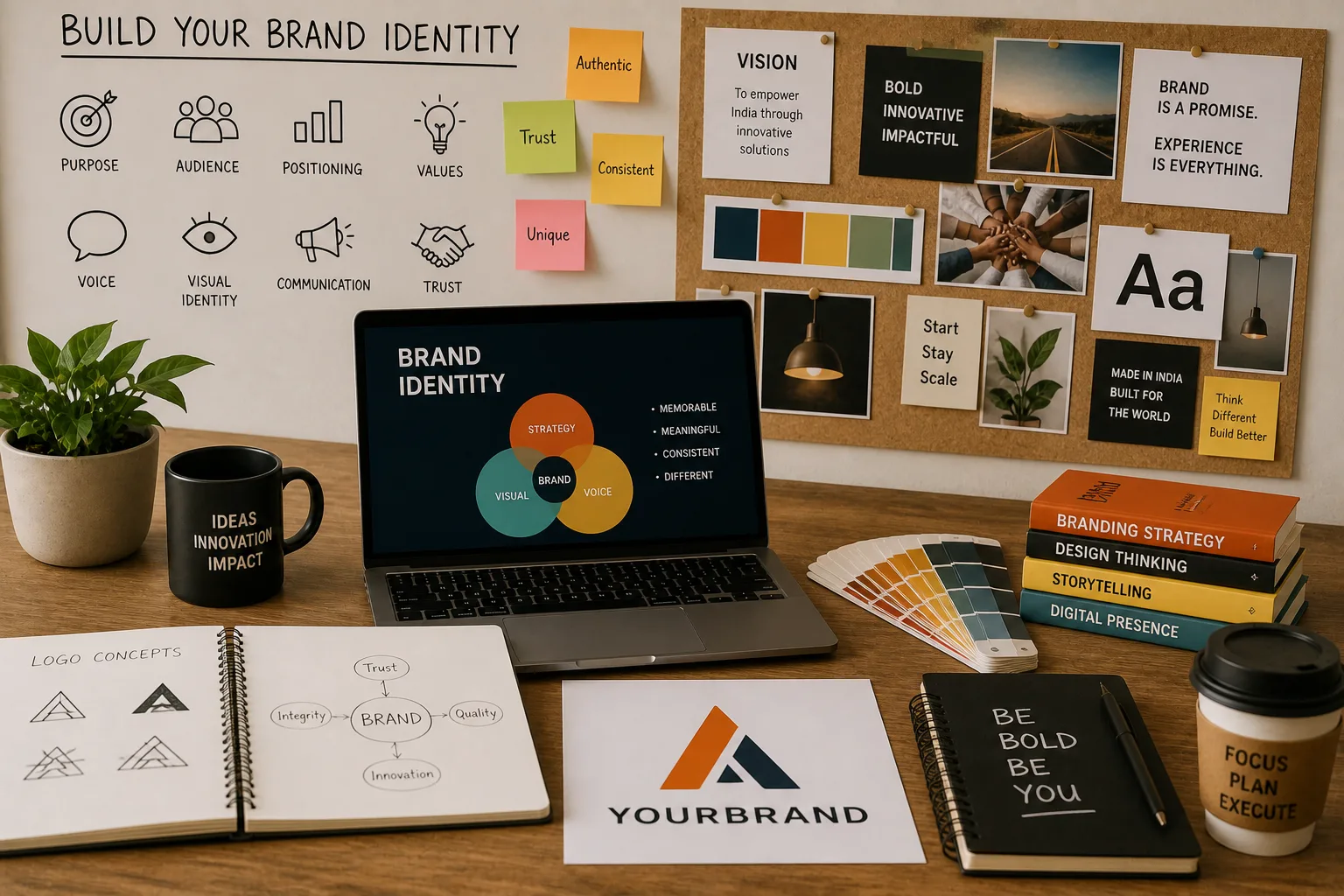
Building a brand is one of those things every startup founder talks about but very few actually do well. In India, where the market is loud, competitive, and deeply emotional, your brand identity is often the difference between being forgotten and being chosen. Whether you're launching a SaaS product, a D2C label, or a local service business, the way your brand looks, speaks, and feels will determine how quickly people trust you — and whether they ever come back.
The good news? You don't need a massive budget or a full-time creative team to build something meaningful. What you need is clarity, consistency, and a genuine understanding of who you're speaking to. This guide breaks down exactly how to get there.
What Brand Identity Really Means
Brand identity is not just your logo. It includes every visual and verbal element that represents your business — your colour palette, typography, tone of voice, tagline, packaging, social media presence, and even how your support team responds to complaints. When all of these elements come together consistently, they create what people instantly recognise as you.
Think of brands like Paper Boat, Mamaearth, or boAt. Each has built a very specific feeling around their products. Paper Boat feels nostalgic and warm. Mamaearth feels safe and natural. boAt feels bold and unapologetically young. None of that happened by accident — it was all intentional, deliberate brand design from the very beginning.
Step 1: Define Your Brand's Core Purpose
Before you touch colours or fonts, get absolute clarity on why your brand exists beyond making money. Ask yourself these questions honestly:
- What problem are we solving, and for whom specifically?
- What values guide every decision we make as a company?
- What do we want customers to feel the moment they interact with us?
- What is the one thing we want to be known for in five years?
Your answers become the foundation for everything else. If you can't answer these clearly, no amount of great design will save your brand from feeling hollow and generic. Consumers — especially younger Indian buyers — can sense inauthenticity immediately.
Step 2: Know Your Target Audience Deeply
Indian consumers are not a monolith. A brand that resonates with urban millennials in Bengaluru may fall completely flat in Lucknow or Coimbatore. Understanding your audience's language preferences, cultural touchpoints, aspirations, and purchasing triggers is non-negotiable if you want your brand to actually connect.
Spend real time doing customer research — not just digital surveys, but actual conversations. What do they currently use? Why? What frustrates them about existing options? What do they brag about to friends? The insights from these conversations will shape your brand personality far more accurately than any template or agency brief ever could.
Step 3: Build Your Visual Identity
Once you have clarity on purpose and audience, it's time to translate everything into visuals. Three elements are non-negotiable:
- Logo: Keep it simple, scalable, and meaningful. It must work in black and white as well as colour, and should look good on everything from a WhatsApp profile picture to a trade fair banner.
- Colour Palette: Choose 2–3 primary colours that evoke the right emotions. In India, context matters deeply — red signals energy and urgency, green suggests health and trust, blue communicates stability and reliability.
- Typography: Pick fonts that match your brand personality. A legal tech startup should not use playful, rounded typefaces. A children's edtech brand should avoid sharp, corporate serifs that feel cold and distant.
Market Comparison
Here's how some well-known Indian consumer brands have positioned their identities across key dimensions:
| Brand | Tone of Voice | Primary Colours | Core Target | Brand Feel |
|---|---|---|---|---|
| boAt | Bold, edgy, no-nonsense | Black & Red | Youth (18–30) | Rebellious, affordable premium |
| Mamaearth | Gentle, caring, responsible | Green & White | Mothers & health-conscious buyers | Safe, natural, trustworthy |
| Paper Boat | Nostalgic, warm, storytelling | Yellow & Brown | Urban adults (25–45) | Childhood memories, authenticity |
| Nykaa | Aspirational, empowering | Pink & Black | Women (18–40) | Glamorous, accessible luxury |
| Lenskart | Witty, direct, confident | Blue & White | All age groups | Modern, approachable, helpful |
Step 4: Develop Your Brand Voice
How your brand communicates is just as important as how it looks. Your brand voice must stay consistent across every single touchpoint — website copy, Instagram captions, support emails, invoices, and even the way your delivery staff greets customers. Decide early: Are you formal or conversational? Serious or playful? Expert or relatable?
For Indian audiences, regional sensitivity matters more than most founders realise. A brand that uses familiar Hindi phrases or regional references in its marketing — without being forced or gimmicky — often builds emotional connection much faster than one that sticks rigidly to formal English throughout.
Step 5: Stay Consistent Across Every Channel
Brand consistency is what transforms a one-time buyer into a loyal advocate. Your Instagram feed should feel like your website, which should feel like your packaging, which should feel like your customer support conversation. Create a simple brand style guide — even a single page — that outlines logo usage rules, exact colour codes, approved fonts, and communication tone. Share it with every team member, freelancer, and vendor who touches your brand.
Many Indian startups invest in great branding at launch and then slowly let it drift as they scale quickly. Resist that temptation. The brands that endure are the ones that protect their identity as fiercely as they guard their product quality.
Final Thoughts
Building a brand identity is not a one-time sprint — it evolves as your business matures and your audience grows with you. Start with absolute clarity on your purpose, invest thoughtfully in your visual and verbal identity, and show up with consistency every single day. Over time, your brand will start doing the selling for you — and that is the most powerful competitive advantage any startup can have.
Ready to take your marketing to the next level? Explore practical strategies in our Marketing Insights section and learn from businesses that have done it right.