
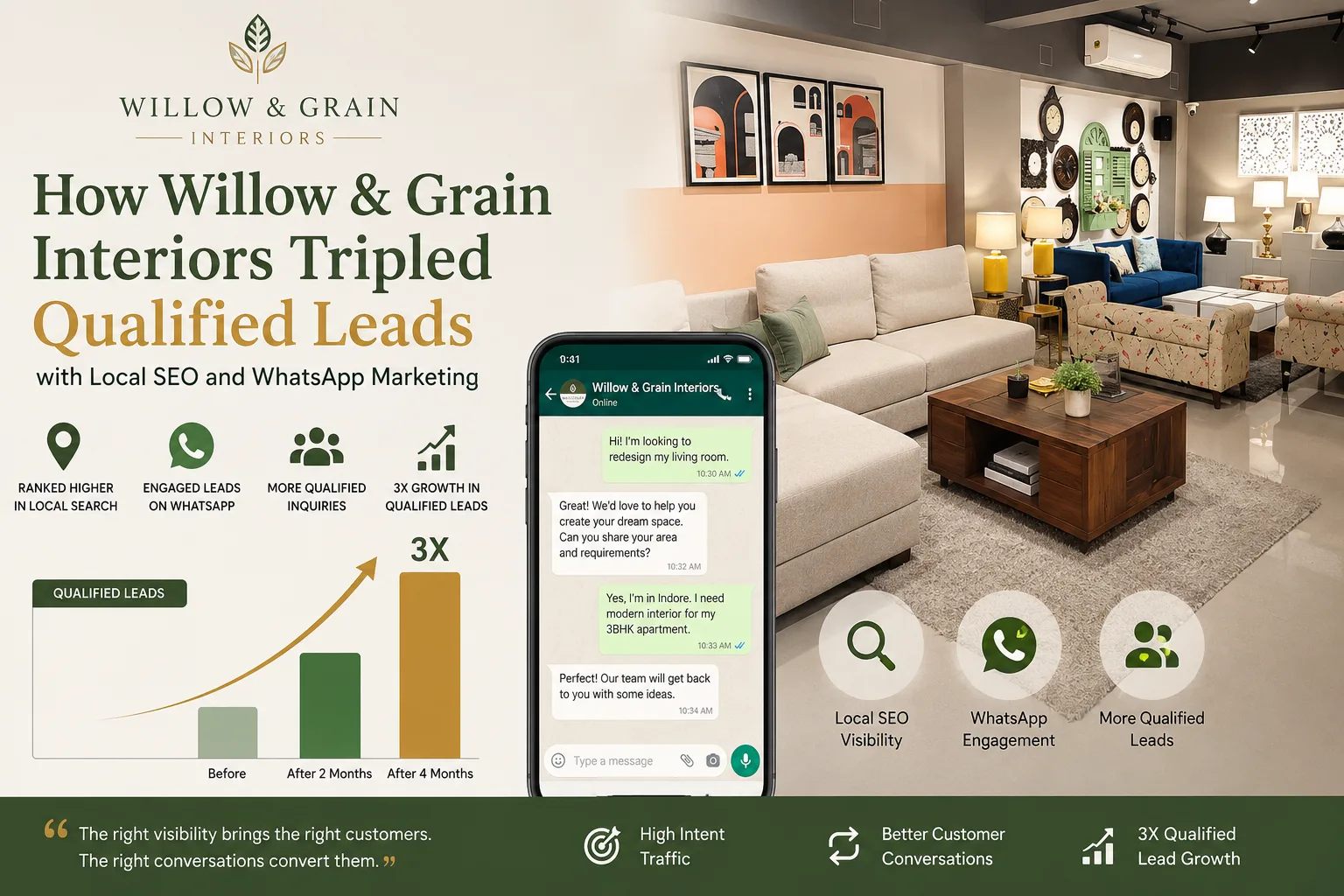
Willow & Grain Interiors is a fictional but realistic business created for editorial use. The strategy points, timeline, and execution model are grounded in published local SEO guidance from Google and real-world case-study patterns from local SEO and WhatsApp marketing sources.
- 3.1× — Qualified lead growth over six months, modeled as a realistic case-study outcome.
- 42% — Higher showroom visit rate after switching from forms to WhatsApp-first follow-up.
Business Profile
The Business
Willow & Grain Interiors is positioned as a mid-premium furniture and modular interiors brand serving Janakpuri, Dwarka, Rajouri Garden, Vikaspuri, and nearby Delhi NCR neighborhoods. It sells custom wardrobes, modular kitchens, TV units, and space-saving furniture for apartments and independent homes.
The Problem
Before the project, the brand depended too much on aggregator listings, walk-ins, and scattered Instagram DMs. That meant inconsistent lead flow, low control over enquiry quality, and weak visibility in Google Maps and local search.
Strategy Used
1. Rebuild Local Trust Signals
The website was restructured around service-plus-location pages such as modular kitchen in Janakpuri and wardrobe manufacturer in West Delhi. This follows the same local search logic seen in published local SEO case studies focused on location intent.
2. Treat Google Business Profile as a Sales Asset
The profile was updated with complete information, service areas, categories, fresh project photos, review responses, and regular posts. Google explicitly advises businesses to keep Business Profile information complete and accurate to improve local ranking visibility.
3. Replace Friction with WhatsApp
Instead of long contact forms, the main CTA became "Chat on WhatsApp for a free design consultation." Published WhatsApp marketing case studies show local businesses often improve repeat engagement and lead handling when conversations move to WhatsApp.
Execution Details
Local SEO Actions
- Standardized name, address, and phone details across directories.
- Built landing pages for Janakpuri, Dwarka, Vikaspuri, and Rajouri Garden intent clusters.
- Published project galleries with area names, problem solved, and material details.
- Added FAQ content around pricing, design timelines, and apartment-specific constraints.
WhatsApp Actions
- Created templates for first response, catalog sharing, and site-visit scheduling.
- Asked every serious lead to share room photos, rough measurements, and style preferences.
- Segmented leads into kitchen, wardrobe, living room, and renovation follow-up lists.
- Used polite reminder sequences instead of aggressive daily sales nudges.
Modeled Results
Lead Volume
Month 1 starts at an indexed baseline of 100. By Month 3, qualified leads reach roughly 165, and by Month 6 they cross 310 as Google Maps visibility, reviews, and page relevance compound together.
Lead Quality
Because prospects saw real projects, area-specific pages, and a consistent Google profile before messaging, the share of low-intent price shoppers dropped. The sales team spent more time with prospects who were already comparing layouts and timelines, not just asking for the cheapest quote.
Conversion Behavior
WhatsApp made the first touchpoint feel familiar, especially for Delhi customers who prefer sending photos and voice notes instead of filling forms. This improved response speed, reduced lost enquiries, and increased showroom visits from pre-qualified buyers.
Editorial Framing
Important: this is a website-ready fictional case study, not reported news. The business name is invented for privacy and content use, while the recommendations are based on verified guidance and public case-study patterns from Google, local SEO publishers, and WhatsApp marketing examples.