
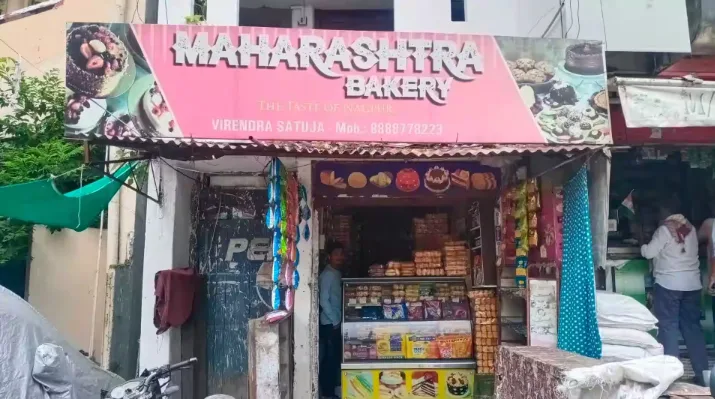
How a Small Nagpur Bakery Grew Monthly Revenue by About 150% Using Digital Marketing
When Amit Deshmukh started his bakery in a Nagpur neighborhood market in 2022, the business operated like many small local shops. Most customers came through nearby foot traffic, personal recommendations and repeat visits. The bakery had little online visibility, very few digital orders and monthly revenue of approximately ₹90,000–₹1,10,000.
Over the following 12–18 months, Amit gradually built a digital presence using Instagram, Google Business Profile, a basic SEO-focused website, WhatsApp Business and locally targeted Meta Ads. By around 2024, the bakery was generating approximately ₹2,20,000–₹2,50,000 or more per month.
Based on the business figures, this represented revenue growth of roughly 150%. The transformation was not caused by one viral post or one large advertising campaign. It came from consistently using several affordable digital-marketing channels together.
- Daily customer footfall increased from 30–40 to 70–90+ visitors.
- Online-originated orders increased to approximately 30–40+ per month.
- The business collected more than 100 Google reviews, mostly with 4- and 5-star ratings.
- The bakery developed a repeat-order rate of more than 40%.
- The team expanded from the owner and one helper to approximately 5–6 people.
Here is how the bakery’s digital growth strategy developed.
Starting Point: A Local Business With Limited Online Visibility
During the bakery’s early months in 2022, Amit handled most of the work himself with the support of one helper. The shop received approximately 30–40 visitors per day, while online orders were uncommon and generally came through personal referrals.
The bakery had few or no Google reviews, no meaningful search traffic and no consistent social-media strategy. This made the business highly dependent on people who already knew about the shop or happened to pass through the neighborhood market.
Amit’s goal was not simply to collect followers. He needed to make the bakery easier to discover, simplify the ordering process and encourage customers to return.
Step 1: Posting Consistently on Instagram
Instagram became one of the bakery’s main discovery channels. Rather than posting only during festivals or special promotions, Amit followed a regular schedule of approximately 3–4 posts per week.
The content focused on products and activities that potential customers could immediately understand:
- Photos of freshly prepared cakes, breads, pastries and other bakery products
- Short videos showing cake decoration and preparation
- Behind-the-scenes content from the bakery
- Festival and weekend product promotions
- Customer orders and completed cake designs
Local discovery was also supported through location tags and relevant hashtags such as #NagpurBakery, #NagpurCakes, #NagpurFood and #BirthdayCakeNagpur.
Within approximately 5–6 months, the Instagram account had grown to several thousand followers. Posts and reels began generating regular profile visits, enquiries and direct messages from people searching for bakery products in Nagpur.
The important lesson was consistency. The business did not depend on every post becoming viral. Posting several times each week kept the bakery visible and helped potential customers remember it when they needed a cake or bakery product.
Step 2: Strengthening Local Visibility on Google
Instagram helped people discover the products, while Google helped people find the physical shop. Amit improved the bakery’s Google Business Profile by adding accurate business information, opening hours, photographs, product details and contact options.
Customers were also encouraged to leave honest reviews after purchasing from the bakery. Over time, the profile grew from having few or no reviews to collecting more than 100 reviews, most of which were rated 4 or 5 stars.
This created an important trust signal. Someone searching for phrases such as “bakery near me,” “cake shop in Nagpur” or “birthday cake delivery in Nagpur” could see recent photographs, customer feedback, directions and contact details before visiting.
As the bakery became easier to find online, daily footfall increased from approximately 30–40 visitors to 70–90 or more. Although several marketing channels contributed to this improvement, Google visibility and customer reviews played an important role in helping local buyers trust the business.
Step 3: Using a Simple Website and Local SEO
Amit also created a lightweight, mobile-friendly website that acted as a central source of information for the bakery. Customers could review the products, understand the ordering process and contact the business through WhatsApp.
The website included essential information such as:
- Popular bakery products and general price ranges
- Custom-cake ordering information
- Expected advance-order timelines
- Service and delivery information
- A click-to-chat WhatsApp button
- Business address and contact information
The bakery also published SEO-focused pages designed around questions local customers were already searching for. Topics included:
- How to Order a Custom Cake in Nagpur
- Birthday Cake Ideas for Children in Nagpur
- How Early Should You Order a Custom Cake?
- Choosing the Right Cake Size for a Birthday Party
As these pages gained search visibility, the website began attracting approximately 500–700 organic visitors per month. The website was not used as a complicated e-commerce platform. Its primary purpose was to attract relevant local visitors and direct them towards the bakery’s main ordering channel.
Step 4: Turning WhatsApp Business Into the Main Order Channel
While Instagram, Google and the website helped customers discover the bakery, WhatsApp Business became the primary channel for completing orders.
This suited the buying behaviour of local customers, especially those ordering customised cakes. Buyers could send reference images, discuss flavours and sizes, confirm delivery details and receive pricing information in one conversation.
Amit organised the ordering process using:
- A WhatsApp product catalogue for popular items
- Quick replies for common questions about prices and delivery
- Labels for new enquiries, confirmed orders and completed orders
- Order confirmations containing the final design, quantity and delivery details
- Occasional broadcasts for festivals, weekend specials and seasonal products
Making repeat purchases easy became a major growth driver. Customers did not need to search for the bakery again or complete a lengthy checkout process. They could simply reopen the WhatsApp conversation and place another order.
After approximately one year, the bakery’s repeat-order rate had increased to more than 40%. This gave the business a more dependable source of revenue and reduced its dependence on finding a completely new customer for every order.
Step 5: Running Locally Targeted Meta Ads
After establishing its organic presence, the bakery used Meta Ads to reach more customers in selected Nagpur localities.
The campaign used a relatively small budget of approximately ₹6,000–₹8,000. Instead of targeting an entire state or broad audience, the advertisements focused on users located within roughly 10–15 kilometres of the bakery’s key service areas.
The advertisements used product photographs, cake-decoration videos and direct calls to action encouraging people to visit the Instagram profile or message the bakery.
The campaign results included:
- Reach of more than 15,000 local users
- Hundreds of Instagram profile visits and direct messages
- Approximately 20–25 new orders during the first month
The campaign demonstrated that even a modest advertising budget can generate measurable results when the audience is geographically relevant and the ordering process is simple.
How the Revenue Growth Developed
The bakery did not achieve its full growth immediately. The approximate growth pattern over the 12–18-month period shows how digital visibility gradually turned into customer enquiries, orders and repeat business.
Months 1–6: Approximately 5–10% growth per quarter as the bakery established its social-media presence and improved local visibility.
Months 7–12: Approximately 20–30% growth per quarter as Instagram enquiries, Google discovery and WhatsApp orders increased.
Months 13–18: Approximately 30–40% growth per quarter as paid advertising, repeat orders and improved operating capacity supported faster growth.
This pattern highlights an important point for small-business owners: digital marketing generally produces cumulative results. Early work builds visibility and trust. Later, those assets begin supporting more enquiries, repeat customers and referrals.
By the Numbers: Before and After Digital Marketing
| Metric | Starting Point in 2022 | After 12–18 Months |
|---|---|---|
| Monthly revenue | Approximately ₹90,000–₹1,10,000 | Approximately ₹2,20,000–₹2,50,000+ |
| Estimated revenue growth | Starting baseline | Approximately 150% |
| Daily footfall | 30–40 visitors | 70–90+ visitors |
| Online-originated orders | Very few, mostly referrals | 30–40+ orders per month |
| Instagram activity | Little or no consistent presence | 3–4 posts per week and several thousand followers |
| Google reviews | Few or none | 100+ reviews, mostly rated 4 or 5 stars |
| Website traffic | No meaningful organic traffic | Approximately 500–700 organic visitors per month |
| Repeat-order rate | No established measurement | More than 40% after approximately one year |
| Team size | Owner and one helper | Approximately 5–6 team members |
Business Expansion Beyond Marketing Metrics
The growth was visible not only in website traffic, followers and messages, but also in the bakery’s operations.
Amit initially managed the bakery with one helper. As order volume and daily customer footfall increased, the business expanded to a team of approximately 5–6 people, including bakers, cake decorators and delivery staff.
This operational expansion was necessary because marketing can only generate sustainable growth when a business has the capacity to fulfil the resulting orders. Additional staff allowed the bakery to handle more customised work, respond to customers more quickly and maintain product quality during busy periods.
Key Lessons for Other Local Businesses
1. Use Different Channels for Different Purposes
Instagram attracted attention, Google helped customers locate and evaluate the bakery, SEO created ongoing search traffic, and WhatsApp converted enquiries into orders. The channels worked together rather than independently.
2. Make Ordering Simple
Customers were not required to download an app or complete a complicated checkout process. A direct WhatsApp conversation reduced friction and worked especially well for customised orders.
3. Build Local Trust
More than 100 positive Google reviews helped reduce uncertainty for first-time buyers. For a neighborhood business, strong local reviews can be more valuable than attracting a large but geographically irrelevant audience.
4. Publish Consistently
Posting 3–4 times per week gave the bakery regular visibility. Consistent, relevant content was more important than waiting for perfect photographs or attempting to make every post viral.
5. Keep Advertising Geographically Focused
Targeting people within a 10–15-kilometre radius helped ensure that the advertising budget reached users who could realistically visit the shop or place an order.
6. Focus on Repeat Customers
A repeat-order rate of more than 40% meant that digital marketing was not only bringing in first-time customers. It was also helping the business build lasting customer relationships.
Final Takeaway
Amit Deshmukh’s bakery demonstrates how a small neighborhood business can create substantial growth without relying on an expensive marketing agency or a very large advertising budget.
Beginning with monthly revenue of approximately ₹90,000–₹1,10,000, the bakery reached roughly ₹2,20,000–₹2,50,000 or more per month after 12–18 months. During the same period, daily footfall more than doubled, online-originated orders reached 30–40+ per month and the business expanded to a team of 5–6 people.
The growth came from a practical combination of consistent Instagram content, local Google visibility, useful SEO pages, WhatsApp-based ordering and carefully targeted Meta Ads.
For bakeries, cafés, retailers and other neighborhood businesses, the central lesson is clear: digital marketing becomes most effective when customers can easily discover the business, trust it, contact it and order from it.
Disclaimer: This is an illustrative case study created using publicly available information, industry examples and estimated figures. The business name, owner details and performance metrics may have been modified or fictionalised for explanatory purposes.