
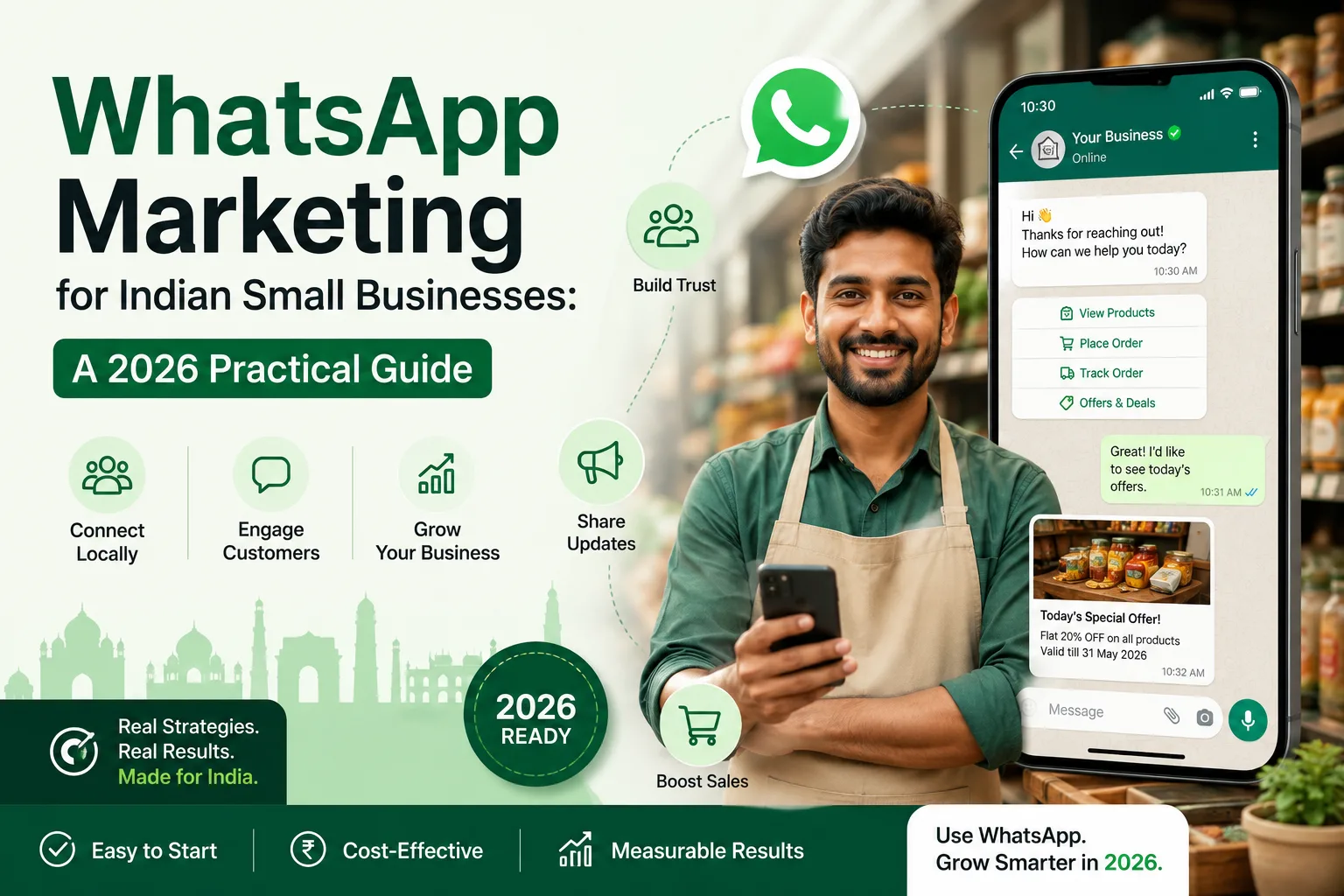
If you run a small business in India and aren't using WhatsApp to reach customers, you're leaving money on the table. With over 500 million users, WhatsApp isn't just a messaging app—it's the digital storefront for neighbourhood kiranas, home bakers, D2C startups, and service providers. In this guide, we'll walk you through exactly how to set up, scale, and optimise your WhatsApp marketing in 2026.
Why WhatsApp Remains a Goldmine for Indian Businesses
Unlike email or social media, WhatsApp messages enjoy open rates above 95%. Most people check WhatsApp multiple times an hour, making it the most intimate marketing channel. For small businesses, this means your promotions, order confirmations, and support messages actually get seen. With the rise of WhatsApp Pay and catalogue features, the platform has evolved into a full-fledged commerce engine. Whether you sell handmade jewellery, run a cloud kitchen, or offer tutoring services, WhatsApp can become your highest-ROI channel when used correctly.
Getting Started: WhatsApp Business App vs. API
The first decision is choosing between the free WhatsApp Business App and the WhatsApp Business API. The app is perfect for sole proprietors who manage conversations manually. The API, on the other hand, enables automation, integration with your CRM, and bulk notifications—ideal for growing teams. Below is a quick comparison to help you decide.
Feature Comparison
| Feature | WhatsApp Business App | WhatsApp Business API |
|---|---|---|
| Cost | Free | Pay per conversation (starts ~₹0.50) |
| User Limit | 1 user per account | Multiple agents, unlimited |
| Automation | Basic away messages, quick replies | Full chatbot integration, workflows |
| Green Tick Verification | Not available | Available (builds trust) |
| Ideal For | Solopreneurs, small retailers | D2C brands, scaling startups |
Crafting Messages That Convert
Forget copy-paste blasts. Personalisation is everything. Use the customer's name, reference their previous purchase, and always offer value first. A kirana store sharing a weekly grocery list with pre-filled carts saw a 30% increase in repeat orders. For service businesses, sending appointment reminders with a one-tap “Confirm” button reduces no-shows dramatically. Keep messages short, mix text with images or catalog links, and always respect the 10 pm to 8 am quiet window unless it's transactional.
Automation and Chatbots
Even a small team can behave like a 24/7 operation with simple automation. Set up greeting messages that ask “What can I help you with today?” and use quick replies for FAQs. If you're on the API, deploy a basic chatbot built via tools like Wati or Interakt. A Gurgaon-based bakery automated 60% of its order inquiries, freeing up the owner to focus on production. Remember to keep a human handover option—nobody likes being stuck with a bot when they need real help.
Measuring Success and Compliance
Track metrics like response time, message open rate, and most importantly, orders originated via WhatsApp. Use UTM parameters on links to tie conversions back. Equally critical is compliance with the Telecom Commercial Communications Customer Preference Regulations. Always take explicit opt-in before sending promotional messages and provide an easy opt-out. In 2026, customers value privacy more than ever, and a clean, permission-based list will outperform a bloated one every time.
By treating WhatsApp as a relationship-building tool rather than a broadcast channel, Indian small businesses can create a loyal community that drives consistent revenue. If you're ready to dive deeper, explore our Marketing Insights section for more actionable strategies.