
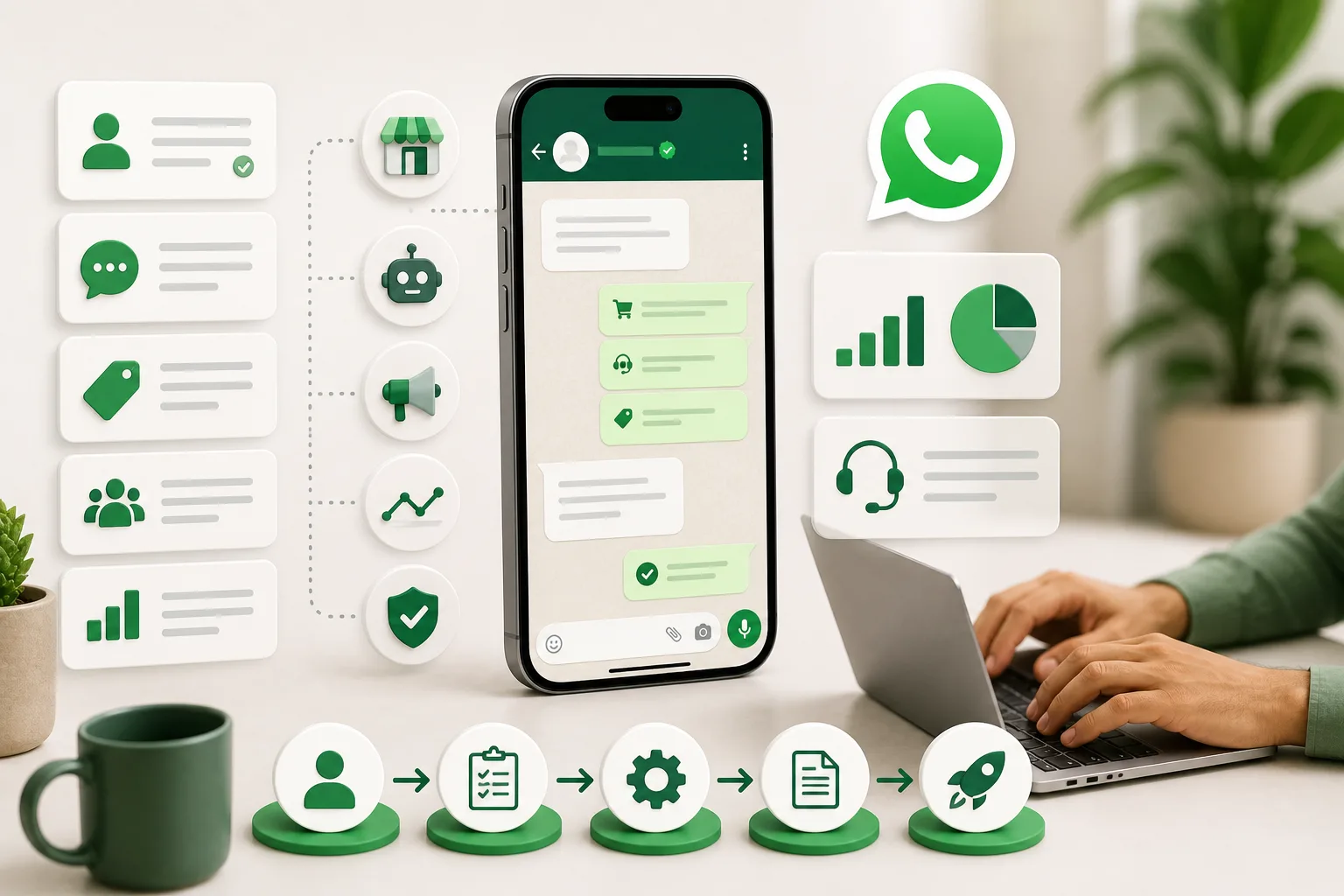
WhatsApp has evolved from a personal messaging app to the backbone of India's micro-business communication. While the free WhatsApp Business app serves small shops well, growing SMEs need the WhatsApp Business API to automate, integrate, and scale conversations without losing the personal touch. In this guide, we break down what the API offers, how it compares to the basic app, and how you can set it up for your business in 2026.
Why the API Matters for Indian SMEs
With over 500 million Indian users, WhatsApp is where your customers already are. The API allows you to send transactional notifications (order updates, payment confirmations), integrate with your CRM, deploy chatbots for FAQs, and even run click-to-WhatsApp ads. The key advantage is scalability: a single dashboard can manage thousands of customer conversations simultaneously, while retaining the human feel through quick replies and templates.
Feature Comparison: WhatsApp Business App vs API
| Feature | WhatsApp Business App | WhatsApp Business API |
|---|---|---|
| Access | One smartphone, one user | Multiple agents via web dashboard |
| Broadcast Messaging | Limited to 256 contacts per list | Unlimited, with template messages |
| Automation | Basic away messages, quick replies | Full chatbot integration, NLP support |
| CRM Integration | None | Seamless with Zoho, Salesforce, custom APIs |
| Pricing | Free | Pay per conversation (around ₹0.30 – ₹1.00 per 24-hour session) |
| Best For | Solo entrepreneurs, small shops | Growing SMEs with >500 customer interactions/month |
Top Benefits for Indian Businesses
1. Higher Engagement Rates: WhatsApp messages have open rates of over 90%, far surpassing email. A cart recovery message sent via API can reclaim up to 25% of abandoned orders.
2. Trust and Familiarity: Customers don't need to download a new app or log in; they already trust WhatsApp with their personal conversations. This familiarity reduces friction.
3. Rich Messaging: Send product catalogues, PDF invoices, location pins, and even interactive buttons within the chat.
4. Compliance: The API uses opt-in templates, reducing spam and building long-term trust.
Step-by-Step Setup for Indian SMEs
Step 1: Choose a Business Solution Provider (BSP) like Interakt, Gupshup, or WATI. These BSPs are authorised by Meta and simplify the technical onboarding.
Step 2: Verify your business on Facebook Business Manager. You'll need a verified Business Manager ID, a phone number not registered on any other WhatsApp account, and a working website or business document.
Step 3: Create message templates for transactional and marketing messages. Get them approved (usually 24-48 hours).
Step 4: Integrate the API with your existing systems—this can be your Shopify store, CRM, or a custom dashboard provided by the BSP.
Step 5: Train your team on the shared inbox, set up automated replies, and define escalation paths for complex queries.
Costs and ROI Considerations
The API follows a conversation-based pricing model. A typical SME with 1000 customer conversations per month might spend ₹500–₹700. Compared to the cost of a tele-calling team or SMS campaigns, this is extremely efficient. Moreover, the ability to send personalized offers and updates directly to the app that customers check dozens of times a day results in conversion rates that can exceed 15-20% for warm audiences. Read more about messaging strategies in our Marketing Insights section.
Conclusion
WhatsApp Business API is no longer a luxury for Indian SMEs—it's a competitive necessity. It bridges the gap between personal service and large-scale automation, letting you grow without losing the human touch that Indian customers value. Start with a free trial from a BSP, experiment with simple templates, and gradually build a conversational commerce engine that keeps your brand in your customers' pockets.